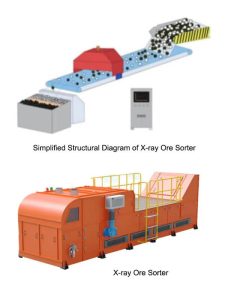
Have you ever wondered how the shiny gold in jewelry stores goes from being buried in rocks to becoming pure and beautiful? The process is complex but fascinating. I will explain the entire journey from ore to finished gold products.
Gold is extracted from ore through a series of steps: ore is crushed, gold is leached using cyanide or other chemicals, then recovered and refined. The process involves crushing, chemical processing, smelting, and refining to achieve high purity. Modern methods are efficient and recover nearly all gold from the ore.
The gold extraction process sounds straightforward, but each step requires precision and care. I will break down the steps to show how raw ore becomes pure gold. Keep reading to understand the detailed process.
How is Gold "Recovered" From The Ore?
The magic happens when invisible gold particles in solution become solid gold again. The recovery process uses clever chemistry to collect every precious speck of gold from the liquid.
Gold is recovered from cyanide solution through a process called carbon adsorption. Activated carbon captures gold-cyanide complexes from solution, which are then stripped using a hot alkaline alcohol solution. Zinc powder is added to precipitate gold from this solution, forming gold sludge containing hundreds to thousands of grams of gold per ton.
This process has transformed gold mining. Let me explain how it works step by step:
1. Ore preparation
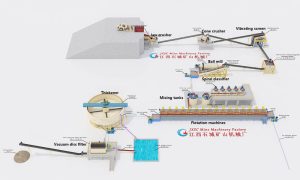
- Jaw crushers break large rocks into fist-sized pieces
- Ball mills grind these into fine powder (200 mesh, like flour)
- This exposes gold particles completely
2. Cyanide leaching
- Ore powder mixes with water to form a slurry
- Sodium cyanide solution dissolves gold
- Forms a water-soluble gold-cyanide complex
- Chemical reaction: 4Au + 8NaCN + O₂ + 2H₂O → 4Na[Au(CN)₂] + 4NaOH
3. Gold recovery
| Step | Material Used | Purpose | Result |
| Adsorption | Activated carbon | Captures gold from the solution | Gold-loaded carbon |
| Stripping | Hot NaOH + alcohol | Removes gold from carbon | Gold-rich solution |
| Precipitation | Zinc powder | Replaces gold in solution | Gold sludge |
The gold sludge appears black or brown and contains:
- 20-90% gold
- Silver and other metals
- Moisture and impurities
This method dominates because:
- Processes low-grade ores effectively
- Recovers over 90% of gold
- Works continuously in large plants
- Relatively low cost compared to alternatives
Modern plants can process thousands of tons of ore daily using this method. The gold sludge then moves to the next stage – smelting into pure gold.
How is Gold Sludge “Smelted” Into Gold Ingots?
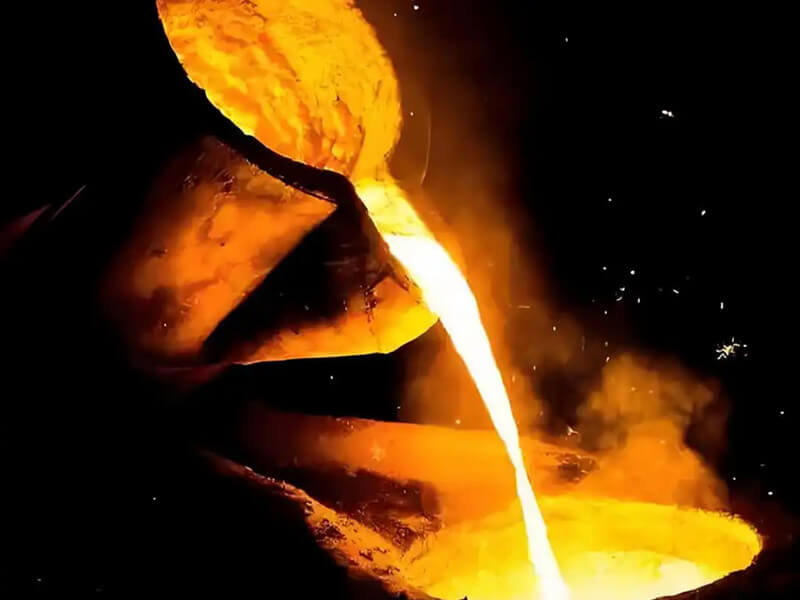
Gold sludge looks far from pure. How does it turn into ingots? Smelting transforms the messy sludge into a solid, usable form.
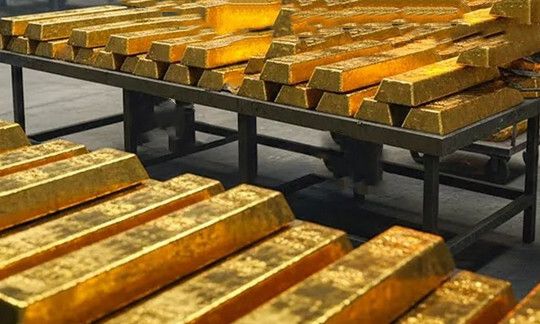
Gold sludge is smelted in furnaces at high temperatures (above 1064°C) to separate gold from impurities. Flux materials are added to remove impurities, creating molten gold that is poured into molds to form ingots. This gold ingot is a rough gold block. It has a golden yellow color, but its purity ranges from only 80% to 95%, and it contains impurities such as silver and copper. At this stage, the gold cannot be used to make jewelry—its purity is insufficient, and neither its hardness nor its malleability meets the required standards.
Smelting is not just about heat. Let me explain key details:
Smelting process details
- Preparation: Sludge is dried to remove moisture.
- Flux addition: Borax and silica remove impurities.
- Heating: The furnace melts gold while separating waste.
- Pouring: Liquid gold is poured into ingot molds.
| Step | Temperature | Duration | Purpose |
| Heating | 1100-1200°C | 1-2 hours | Melt gold |
| Flux reaction | 1200°C | 30-60 minutes | Remove impurities |
| Pouring | 1100°C | Immediate | Shape ingots |
How is Crude Gold Refined to a Purity Level of 999 or Higher?
Crude gold still contains impurities. How do we reach 99.9% purity? Refining methods ensure gold meets high standards.
Crude gold is refined through electrolysis or chemical processes to achieve 999 purity. Electrolysis uses electric current to separate pure gold from other metals, while chemical methods like aqua regia dissolve impurities, leaving ultra-pure gold.
Different refining methods exist. Here’s how they compare:
Electrolysis (Wohlwill process)
- How it works: Gold dissolves in hydrochloric acid, then pure gold plates onto cathodes.
- Purity: Up to 999.9 purity possible.
- Best for: Large-scale refining.
Electrolytic refining constitutes the core stage of gold ore extraction; indeed, the industrial production of 999-fine gold relies entirely upon it. The underlying principle involves two distinct steps:
Preparation of the “Gold Electrolyte”
- Crude gold is dissolved in aqua regia(a mixture of concentrated hydrochloric acid and concentrated nitric acid in a 3:1 ratio), thereby converting the gold into a solution of chloroauric acid.
- A reducing agent is then added to precipitate and remove impurities—such as copper and iron—yielding a pure, gold-bearing electrolyte solution.
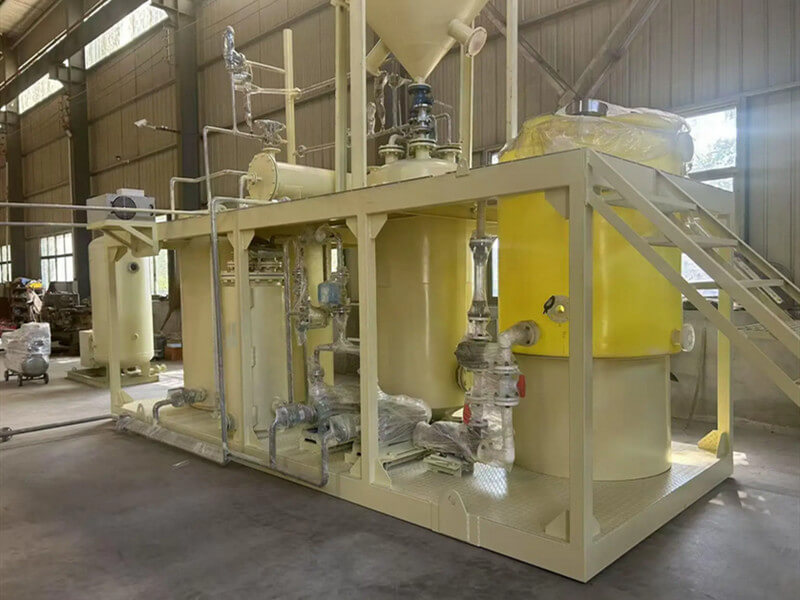
Electrolysis—The “Translocation” of Gold
- A sheet of pure gold serves as the cathode (the electrode receiving the gold), while a block of crude gold acts as the anode (the electrode supplying the gold); both are immersed in the electrolyte solution, and a direct current is applied.
- Upon the application of current, gold atoms within the crude gold anode lose electrons, transforming into gold ions that dissolve into the electrolyte solution.
- Driven by the electric field, these gold ions migrate toward the gold cathode; there, they regain electrons and are reduced back into pure gold atoms, which subsequently deposit onto the surface of the gold sheet.
- This process repeats continuously, causing the gold cathode to grow progressively thicker and its purity to increase steadily.
- Once the electrolysis is complete, the purity of the gold deposited on the cathode exceeds 99.99%.
- Thus, the purification process is brought to completion—transforming crude gold with a purity of 95% into 9999-fine gold.
Chemical refining (Aqua regia method)
- How it works: Aqua regia dissolves gold, then precipitates pure gold.
- Purity: Up to 999 purity.
- Best for: Smaller batches or jewelry production. These methods guarantee gold meets strict quality standards.
How is 999 Fine Gold Transformed Into Gold Bars or Jewelry?
Pure gold is soft. How do we turn it into durable bars or jewelry? Alloying and shaping create final products people use every day.
999 gold is alloyed with metals like silver or copper for durability, then cast or pressed into bars or jewelry pieces. Goldsmiths use tools to shape, engrave, and finish products to a market-ready condition.
Creating finished goods involves multiple steps:
Gold bar production
- Melting pure gold.
- Pouring into bar molds.
- Cooling and polishing.
- Stamping with purity marks.
Jewelry making steps
- Designing the piece.
- Creating a wax model.
- Casting gold around the model.
- Polishing and setting stones.
From Ore to Refined Gold: The Complete Journey
The transformation of gold from raw ore to finished products is an intricate process requiring specialized knowledge and equipment. It begins with mining and extraction, followed by a precise refining procedure that involves four key steps: cyanide leaching (gold dissolution), activated carbon adsorption (gold recovery), smelting (producing crude gold bars), and electrolytic refining (purification). Through these stages, the metal is progressively purified and shaped into bullion or jewelry—a remarkable journey from rugged stone to refined rings. As a mining equipment manufacturer, we deeply understand these processes and provide solutions to ensure their efficiency and safety at every step.