In the heart of every mining operation and construction project lies a crucial decision: selecting the right rock crusher. These powerful machines transform massive boulders into workable aggregates, serving as the backbone of mineral processing and material production. Unlike a simple procurement, choosing crusher equipment represents a strategic investment that impacts your project’s efficiency, operational costs, and final product quality for years to come. This comprehensive guide explores 7 fundamental rock crusher types—from rugged jaw crushers to versatile mobile units—and delivers actionable selection strategies tailored to specific material characteristics and production needs.
7 Mainstream Rock Crushers
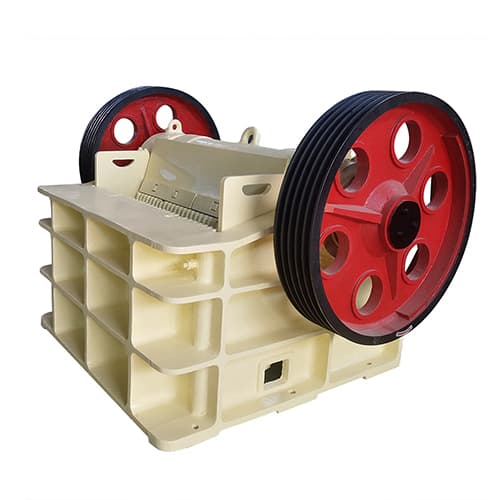
1. Jaw Crusher
The working principle of a jaw crusher is simple: it relies on two jaw plates (one fixed, one reciprocating) to crush rocks through compression. It excels as a coarse crushing device, handling hard, highly abrasive materials—what we commonly call primary crushing—and performs exceptionally well in this area.
Advantages
- Exceptionally robust structure, capable of handling large materials;
- Low maintenance difficulty, simple operation.
Disadvantages
- Poor particle shape of the crushed product, prone to producing flaky particles;
- Generates some noise and dust during operation.
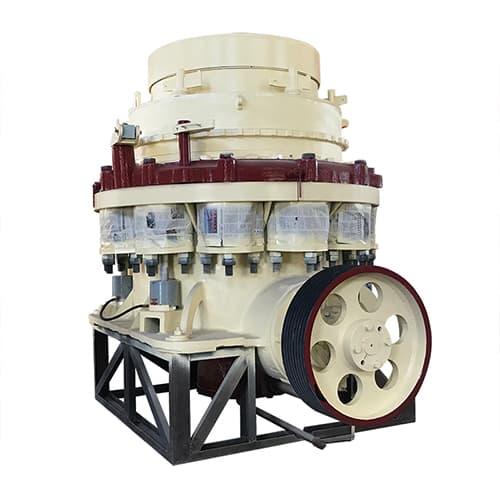
2. Cone Crusher
When operating, the moving cone inside the cone crusher rotates eccentrically within the fixed cone chamber, crushing rocks through a combination of compression and grinding. It is suitable for secondary and tertiary crushing operations, producing products with uniform particle shape and good appearance. It is also highly effective in processing medium-hard to hard materials.
Advantages
- High crushing efficiency, good product particle shape;
- Large capacity, relatively uniform equipment wear.
Disadvantages
- Higher initial purchase cost;
- More difficult to maintain than a jaw crusher;
- More sensitive to the particle size and moisture content of the feed.
3. Impact Crusher
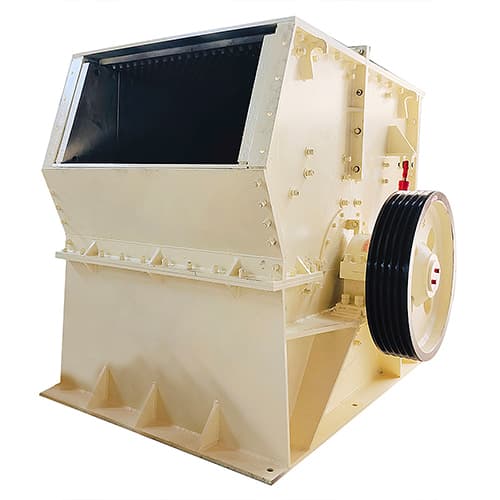
The working principle of an impact crusher is as follows: A high-speed rotating rotor drives hammers to impact the material, while the material further crushes upon impact with the impact plates. The crushing process mainly relies on impact force. It excels in secondary crushing operations and is suitable for processing soft to medium-hard, low-abrasive materials. It is particularly adept at producing regular cubic aggregates and is widely used in the recycling industry.
Advantages
- Product particle shape control;
- Large crushing ratio, flexible adjustment of discharge particle size.
Disadvantages
- Rapid wear rate when processing high-hardness, highly abrasive materials;
- Produces more fine powder, resulting in relatively high energy consumption.
4. Vertical Shaft Impact Crusher/VSI Crusher
The working principle of a vertical shaft impact crusher (VSI crusher) is as follows: Material enters through the feed inlet at the center of the rotor, is accelerated by the high-speed rotating rotor, and is thrown towards the surrounding anvil or lining, crushed into fine particles through a “stone-on-stone” or “stone-on-iron” method, while also shaping the material. It is suitable for three-stage crushing and shaping operations, performing particularly well in manufactured sand production, producing products with excellent particle shape, and is suitable for scenarios requiring large quantities of cubic particles.
Advantages
- Controllable product particle shape;
- High sand-making efficiency, capable of processing various types of materials.
Disadvantages
- High equipment wear cost;
- Sensitive to feed particle size and moisture content;
- Generally not used for primary or secondary crushing operations.
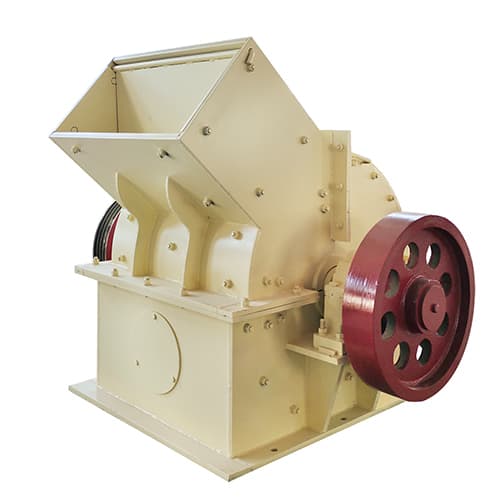
5. Hammer Crusher
A hammer crusher crushes materials by using hammers on a high-speed rotating rotor to impact them, while the material also collides and rubs against the screen plate. It is suitable for crushing medium-hard, brittle materials such as limestone, gypsum, coal, and calcite, and is often used in single-stage crushing operations to directly obtain fine-sized products.
Advantages
- High crushing ratio, relatively simple structure;
- Fine-sized materials can be obtained in a single crushing operation.
Disadvantages
- Rapid wear of hammers and screen plate;
- Produces a large amount of fine powder;
- Poor adaptability to highly viscous or high-moisture materials;
- Relatively high noise level during operation.
6. Roller Crusher
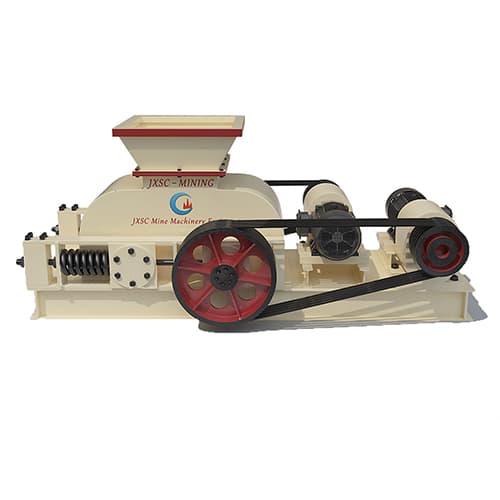
Roller crushers come in single-roller, double-roller, and multi-roller forms. During operation, two parallel and counter-rotating rollers crush materials through compression and shearing. It is suitable for crushing medium-hard to soft, highly viscous, or relatively wet materials such as coal, salt, clay, and oil shale. It can be used for single or double crushing operations and is suitable for scenarios where over-crushing of materials is undesirable and uniform particle size is required.
Advantages
- Does not over-crush materials;
- Simple structure;
- Proficient in handling sticky and wet materials;
- Discharge particle size is adjustable.
Disadvantages
- Relatively low capacity;
- Cannot handle extremely hard materials; roller surfaces are prone to wear.
7. Mobile Crusher (Tracked/Wheel-Mounted)
A mobile crusher is not a device with an independent working principle, but rather a complete mobile crushing and screening unit formed by mounting jaw crushers, cone crushers, impact crushers, screening machines, etc., on a tracked or wheel-mounted chassis. It is particularly suitable for scenarios requiring frequent changes of work location, limited space, urban demolition and recycling, and temporary or short-term projects.
Advantages
- Easy to move and quick to install;
- Reduces material transportation costs;
- Can travel directly to the work surface.
Disadvantages
- The initial purchase cost is higher than that of comparable fixed equipment.
- Capacity may be slightly lower than that of large fixed equipment.
- Maintenance is more difficult.
Stone Crusher Selection Guide
When selecting a rock crusher, consider the following key points:
- Coarse Crushing:Jaw crusher (commonly used); for soft materials, a large impact crusher is also a good choice; mobile crushing units often include jaw crushers.
- Secondary Crushing:Cone crusher for hard rock (suitable for high-capacity, high-particle-shape requirements); impact crusher for soft to medium-hard rock and recycled materials; roller crusher for specific materials like coal where fine powder reduction is required.
- Third Crushing and Shaping:Cone crusher for fine crushing; vertical shaft impact crusher (sand making machine) for shaping and sand making; impact crusher is also suitable.
- Single-Stage Crushing:Large impact crusher or hammer crusher (suitable for specific materials).
- Frequency-Required Scenarios:Select a mobile crusher integrating a jaw, cone, or impact crusher and a screening machine.
- Processing Hard/Highly Abrasive Materials:Jaw crusher or cone crusher is preferred. For processing highly viscous/high-moisture materials: consider roller crushers, specialized cone crushers, or impact crushers.
- For manufactured sand production:Vertical shaft impact crushers (sand making machines) are the best choice.
Conclusion
The crusher selection process transcends simple equipment comparison—it demands a holistic understanding of your material properties, production goals, and operational constraints. Each crusher type we’ve examined brings unique advantages to specific crushing scenarios, whether it’s the jaw crusher’s robustness in primary crushing or the VSI crusher’s precision in manufactured sand production. Ultimately, successful selection hinges on matching your project’s technical requirements with the crusher’s operational strengths. By applying the insights from this guide, you’ll be equipped to make an informed choice that delivers optimal crushing performance throughout your project lifecycle.