Introduction: The Golden Pursuit
For centuries, gold has captured humanity’s imagination, fueling exploration and technological innovation. Today, successful gold discovery and extraction blend geological wisdom with cutting-edge technology. Whether you’re a weekend prospector or mining professional, understanding these three critical phases—finding deposits, extracting ore, and selecting optimal methods—separates wishful thinking from profitable operations. Modern techniques have transformed gold hunting from luck-based panning into a systematic science, while mining methods now balance efficiency with environmental responsibility. Let’s explore the complete journey from field identification to profitable extraction.
How to Find Gold Mines? A Practical Guide to Gold Prospecting
Gold prospecting is both an art and a science, requiring keen observation, geological knowledge, and systematic exploration techniques. Whether you’re a professional geologist or an aspiring prospector, understanding these key methods can significantly increase your chances of discovering viable gold deposits.
1. Field Observation: The Geologist’s “Three-Step” Method
Seasoned prospectors rely on visual cues to identify potential gold-bearing areas. These observable signs form the foundation of any successful gold hunt.
(1) Rock Types: Recognizing Gold-Hosting Formations
- Quartz veins: Milky white quartz veins, especially those containing pyrite (fool’s gold), are classic gold indicators. Gold often concentrates along fractures in these veins.
- Fault zones: Crushed rock and fault gouge create pathways for gold-rich fluids. Mineralization often concentrates where rocks have been fractured.
- Banded iron formations (BIFs): distinctive, rusty-red and black-striped rocks in greenstone belts host important gold deposits worldwide.
Key Saying: “Break open quartz—gold might be inside; look closely within the fault zone; don’t overlook the banded iron ore.”
(2) Color Clues: Hunting the “Iron Hat.”
- Rusty red/yellow stains: These iron oxide “caps” (gossans) form when sulfide minerals like pyrite weather at the surface—a telltale sign of potential subsurface gold.
- Dark manganese or hematite stains: Can indicate past hydrothermal activity associated with gold deposition.
Field Tip: “Red-stained ground may hide golden veins below.”
- Alteration Signs: Tracking Hydrothermal Fingerprints
- Silica hardening: Rocks become unusually hard with fine quartz veins—proximity to mineralization.
- Pyritization: Brassy-yellow pyrite specks often accompany gold.
- Iron staining: Rusty coatings from oxidized pyrite residues.
- Sericite/chlorite: Shiny mica flakes or greenish alteration suggest hot fluid-rock interactions.
Rule of thumb: “Hard rocks with sparkly minerals and weird colors deserve sampling.”
Note: Visual signs help prioritize areas, but cannot confirm gold grades—technical methods are essential for verification.

2. Technical Exploration: The Three-Phase Approach
Modern gold hunting follows a progressive strategy from broad surveys to precise targeting. Once a promising area has been identified through field observations, technical methods are employed, following a step-by-step process of “geochemical surveying, geophysical targeting, and engineering verification.”
(1) Geochemical Surveys (Chemical Trapping)
Principle: Gold is often associated with specific elements; analyzing the elemental composition of soil or rock can help trace the extent of mineralization.
Soil sampling: Grid-based collection to map gold and pathfinder elements (As, Sb, Hg, Ag). Strong multi-element anomalies often pinpoint mineralization.
Rock sampling: Direct analysis of outcrops or trenches determines gold concentration and mineral associations.
Key Indicators: The better the correlation between anomalies in elements such as As, Sb, Hg, and Ag and gold anomalies, the greater the prospecting value.
(2) Geophysical Methods (Underground Imaging)
Principle: Detecting subsurface geological features by exploiting differences in the physical properties of ore and host rock.
Magnetic Survey: Identifying magnetic anomalies—ore-bearing structures within greenstone belts exhibit positive magnetic anomalies, while BIF-type ore bodies exhibit negative magnetic anomalies.
Electrical Exploration: Identifying differences in electrical conductivity and polarization—sulfide mineralization zones exhibit “low resistivity, high polarization” characteristics.
Resistivity Method: Identifying silicified zones—silicified zones in Carlin-type gold deposits exhibit high resistivity.
Core Functions: Rapidly covering large areas, discovering hidden ore bodies, and guiding drill hole planning.
(3) Drilling & Trenching (Ground Truth)
Principle: Directly expose the ore body using mechanical means to obtain authentic samples.
Trenching: Excavate the surface overburden to expose shallow ore bodies and collect representative samples.
Drilling: Drill into the ground to retrieve rock cores, thereby determining the occurrence, thickness, and grade of deep ore bodies.
Tunneling: Excavating adits along the ore body to directly observe its morphology and verify drilling results.
Golden rule: “Assay results trump all—only lab tests prove economic viability.”
Final Tip for Prospectors
Start with boots-on-the-ground observations in known gold regions. Combine traditional “rock-hounding” with modern geochemical/geophysical tools to methodically narrow targets. Remember: most surface gold signs lead to microscopic particles—patience and persistence pay!
How to Mine for Gold? A Step-by-Step Guide to Gold Extraction
Gold mining is a complex process that requires careful planning, advanced technology, and efficient resource management. Depending on the depth and geology of the deposit, miners use different methods—from open-pit excavations to deep underground tunnels. Here’s a breakdown of the two main gold mining methods.
1. Open-Pit Mining (Surface Mining)
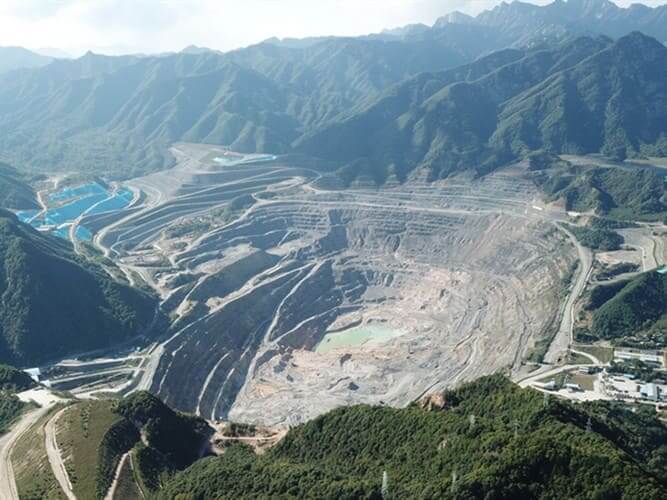
When is it used?
- Gold deposits located near the surface (shallow)
- Low-cost stripping ratio (waste rock removed vs. ore extracted)
- Large-scale, bulk ore deposits (e.g., Carlin-type, epithermal veins)
Steps in Open-Pit Gold Mining
Blasting & Drilling
- Holes are drilled into the rock and filled with explosives.
- Controlled blasting breaks the ore for easy transport.
Loading & Hauling
- Excavators load gold-bearing rocks onto haul trucks.
- Ore is transported to processing plants for crushing and extraction.
Waste Management
- Excess rock (waste) is stored in designated dump sites.
- Key Metric: Stripping ratio– The lower the ratio, the more economical the mine.
Advantages
- High production rates
- Lower cost per ton of ore
- Suitable for large, low-grade deposits
Disadvantages
- Significant environmental footprint
- Limited to near-surface deposits
2. Underground Mining (Hard Rock Mining)
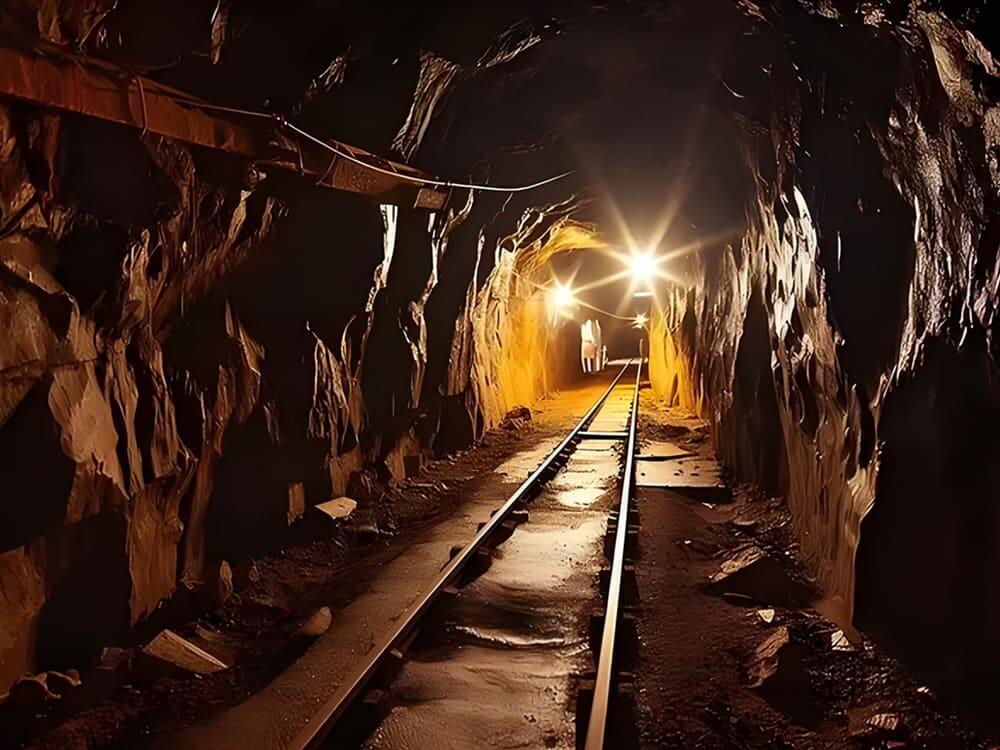
When is it used?
- Gold deposits deep underground
- High-grade ores where open-pit is uneconomical
- Steeply dipping ore bodies (veins, lode deposits)
Three Main Underground Mining Methods
(1)Open Stope Mining (Unsupported Mining)
- Used in stable rock conditions
- Ore is extracted without backfilling; empty spaces (stopes) remain temporarily
- Example: Sublevel stoping
(2) Cut-and-Fill Method (Backfill Mining)
- Each mined section is filled with waste rock or processed tailings
- Prevents ground collapse & reduces surface disturbance
- Common in high-value gold mines
(3)Block Caving (Massive Mining Method)
- Large-scale method for near-vertical, low-grade deposits
- Ore collapses under its own weight after undercutting
- Used where surface subsidence is acceptable (remote locations)
Crucial Underground Support Systems
- Hoisting: Ore is lifted via shafts and transported for processing
- Ventilation: Maintains airflow to remove toxic gases (e.g., radon, dust)
- Pumping: Prevents flooding in deep mines
Advantages
- Access to deep, high-grade deposits
- Minimal surface disturbance compared to open pits
Disadvantages
- Higher operational costs
- More complex safety & engineering challenges
How to Choose the Right Gold Mining Method?
Selecting the optimal gold mining method depends on multiple factors—geological conditions, economics, environmental impact, and safety considerations. Whether you’re a mining investor, geologist, or operator, understanding these key criteria will help maximize efficiency and profitability.
1. Key Factors in Selecting a Mining Method
(1) Ore Deposit Characteristics
| Factor | Open-Pit Preferred | Underground Preferred |
| Depth | Shallow (<300m) | Deep (>300m) |
| Size | Large, spread-out | Small, concentrated |
| Grade | Low-grade, bulk | High-grade, selective |
| Shape | Blanket-like, tabular | Narrow veins, steeply dipping |
| Rock Strength | Weak to moderate | Strong & stable |
Example:
A shallow, low-grade deposit (e.g., Nevada’s Carlin Trend) → Open-pit mining
A deep, high-grade vein (e.g., South Africa’s Witwatersrand) → Underground mining
(2) Economic Viability
- Capital Costs: Open pits require heavy earth-moving equipment.
- Operating Costs: Open-pit ($10–$30/ton) is cheaper than underground ($50–$150/ton).
- Stripping Ratio: If waste removal exceeds 5:1 (waste: ore), underground mining may be better.
(3) Environmental & Social Impact
- Open-pit: Large footprint, visible scars, acid drainage risk.
- Underground: Less surface disruption but higher energy/water use.
- Regulations: Some countries restrict open pits (e.g., parts of Canada, Colombia).
(4) Safety & Workforce Requirements
- Underground risks: Collapses, gas explosions, heat stress.
- Open-pit risks: Slope failures, dust pollution.
- Automation trends: Autonomous haul trucks (open pit) vs. robotic drills (underground).
2. Decision Framework: How to Choose Step-by-Step
Step 1: Geological Evaluation
- Conduct drilling & assays to model ore body shape, grade, and depth.
- Use geostatistics to estimate reserves.
Step 2: Preliminary Scoping Study
- Compare NPV (Net Present Value) and IRR (Internal Rate of Return) for both methods.
- Example: If open-pit NPV is $1B vs. underground’s $600M, the choice is clear.
Step 3: Risk Assessment
| Risk | Open-Pit Mitigation | Underground Mitigation |
| Ore depletion | Expand pit limits | Explore deeper shafts |
| Market crash | Stockpile low-grade ore | Prioritize high-grade zones |
| Regulatory delays | Progressive reclamation | Smaller surface footprint |
Step 4: Pilot Testing (If Uncertain)
Small-scale trial mining (e.g., test pit or exploration decline) helps validate assumptions.
Step 5: Final Selection
After all studies, the best method is the one that:
- Maximizes ore recovery
- Minimizes cost per ounce
- Meets environmental/safety laws
3. Hybrid & Emerging Approaches
- Transition from open pit → underground (e.g., Grasberg, Indonesia)
- Bioleaching & in-situ recovery (for low-grade, deep ores without diggers)
- AI-assisted mining (machine learning optimizes drill/blast patterns)
Conclusion: Responsible Gold, Lasting Value
Gold mining remains one of humanity’s most complex industrial undertakings, requiring equal parts geological insight, engineering precision, and environmental stewardship. As technology advances, the industry moves toward smarter exploration (AI-assisted targeting), cleaner extraction (bioleaching), and safer operations (automated mining systems). Remember: successful gold operations don’t end with extraction—progressive reclamation and community engagement ensure long-term viability. Whether you’re analyzing soil samples or selecting mining methods, let this principle guide you: the most valuable deposits aren’t just measured in ounces, but in sustainable practices that preserve both wealth and wilderness for future generations.