Gold mining has long been considered a capital-intensive industry, with high upfront costs deterring many small and medium-sized enterprises. For cash-conscious mining entrepreneurs, gravity separation emerges as the ultimate low-barrier entry point – delivering fast returns with minimal upfront investment. Unlike high-tech alternatives, this elegant solution requires no complex chemistry, relying instead on nature’s own blueprint: gold’s unmatched density to separate precious metal from worthless ore effortlessly.
The Mainstream Method with the Lowest Investment Threshold: Gravity Separation
In the world of mineral processing, where complexity and costs often dominate discussions, gravity separation stands out as a refreshing counterpoint—simple, practical, and surprisingly effective. Imagine extracting gold with nothing more than flowing water and gravity, bypassing the need for expensive chemicals or energy-intensive machinery. This method, rooted in centuries-old gold panning techniques, remains relevant today precisely because of its unmatched accessibility. But what exactly makes it the go-to choice for small-scale miners and operations with tight budgets? Let’s delve into the key advantages that solidify gravity separation as the lowest-barrier entry point in mineral processing.
Key Advantages of Gravity Separation
1. Extremely Simple Process
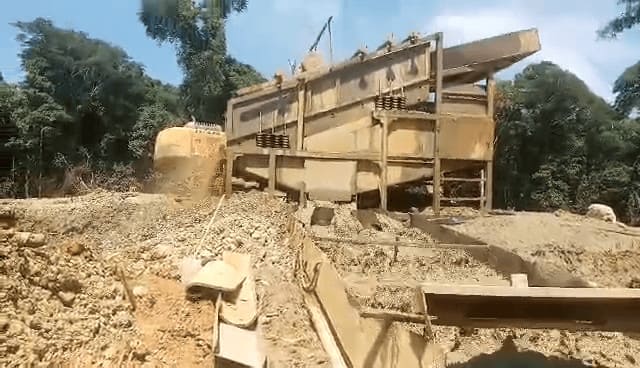
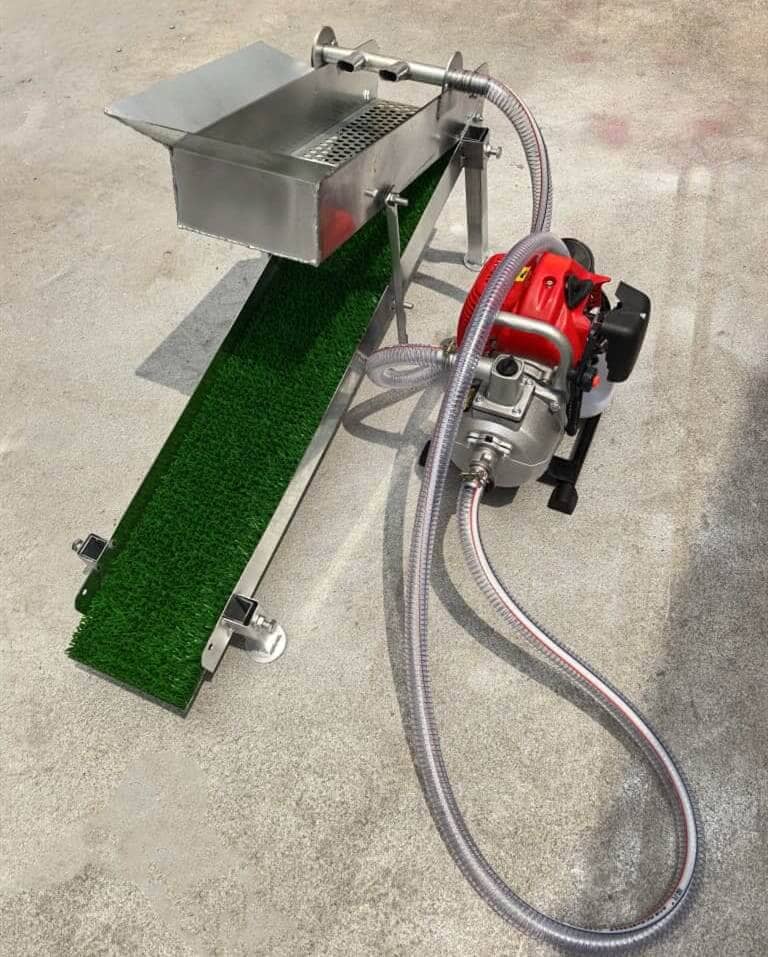
At placer gold mines, you often see this scene: an excavator with a few sluices and a water pipe is all you need. Gold, being denser, naturally sinks to the bottom, while the lighter sand and gravel are washed away. This is the most basic form of gravity separation—“relying on gravity, without any reagents.”
2. Low Equipment Investment
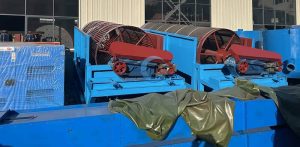
Compared to flotation machines requiring complete sets of equipment and cyanidation processes requiring mixing tanks and environmental protection facilities, the core equipment for gravity separation consists of familiar components like jigs, shaking tables, and sluices. A small, mobile gold panning system can be purchased for tens of thousands of yuan, and secondhand equipment is readily available and easy to maintain.
3. Less Environmental Pressure
This is becoming increasingly important. The gravity separation process does not add cyanide or flotation reagents; the discharged water is just sludge. A sedimentation tank can be dug, the water clarified, and the water recycled, making environmental approvals relatively easier to obtain and saving the cost of building a wastewater treatment system.
Mineral Processing Methods: Investment Thresholds Compared
(Gravity Separation vs. Heap Leaching/Flotation/Cyanidation/Combined Processes) Not all mineral processing methods are created equal when it comes to startup costs. Below we compare key approaches—ranked by investment threshold—to help you identify the most feasible option for your operation:| Mineral Processing Method | Investment Threshold | Main Costs | Suitable Ores |
| Gravity Separation | * Lowest | Excavation equipment, sluice/shaking table, water pump | Placer gold mines, or rock gold mines, where you want to recover coarse gold early |
| Heap Leaching | ** Moderate | Geomembrane, spray system, activated carbon column | Low-grade oxide ores, but requires a certain area, slow to show results |
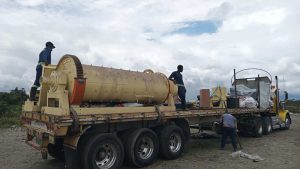
| Flotation | *** High | Crusher, ball mill, flotation machine, reagents | Rock gold mines, especially sulfide ores, require very fine grinding |
| Full Cyanide | **** Very High | Fine grinding equipment, leaching tank, environmental protection facilities | High-grade easily leached ores, environmental protection investment is the biggest expense |
| Combined Process | ***** Highest | Multiple systems overlaid, automated control | Complex and difficult-to-process ores require customized design. |
- Note: Cost-effectiveness is an advantage, but not a panacea.
Understanding Gravity Separation’s Boundaries
While gravity separation offers the lowest investment threshold among mineral processing methods, its effectiveness depends on two critical factors:1. The Particle Size Barrier
Challenging for sub-0.1mm gold. Gravity separation struggles to retain ultra-fine gold particles (<0.1mm), which often report to tailings due to:- Insufficient mass for centrifugal capture
- Water flow velocity overpowers fine particle settlement
- Operational Tip: Observe tailings color – visible gold flakes suggest recoverable sizes, while “flour gold” losses may require supplemental methods
2. The Ore Type “Sweet Spot.”
- Placer gold mines: This is the absolute domain of gravity separation, especially in riverbed mining, where mobile gold pans are standard equipment.
- Auxiliary for lode gold mines: Many large gold mills also rely on gravity separation. They place gravity separation equipment after the ball mill to “grab” the coarse gold particles first, avoiding excessive grinding and loss. However, this requires a more refined configuration, and the investment will be higher than simply performing gravity separation.
- Ore contains >30% ultrafine gold (<0.074mm)
- Sulfide-bound gold requires chemical liberation first
- Clay-rich material causes a slime coating
Gravity Separation Success Stories: When "Low-Tech" Delivers High Returns
While gravity separation has clear limitations, these real-world cases demonstrate its unmatched value in specific scenarios—particularly where flexibility and low capital expenditure matter most.
Case 1: Small-Scale Trial Mining
Two years ago, in a river channel, someone used a simple sluice box combined with water jets for operation. The entire set of equipment costs less than $7,000 and could be operated by three people. Although the recovery rate was not as high as that of large gold-processing vessels, its flexibility was a major advantage. After mining at one point, they could move to another, and the cost was recovered in six months. This is the advantage of gravity separation: “small boat, easy to turn around.”
Case 2: Tailings Reuse
A gold mine had some coarse gold particles and associated tungsten sand remaining in the tailings pond. They used two Nelson concentrators (and several shaking tables) to re-wash the tailings. The investment was small, but they were able to extract a significant amount of gold from the waste each year, and also sold the quartz sand from the tailings to glass factories, achieving multiple benefits.
Conclusion
For mineral processors prioritizing rapid deployment and minimal capital outlay, gravity separation remains the undisputed champion of accessibility. Its elegant mechanics—harnessing gold’s natural density—eliminate the need for expensive reagents, complex machinery, or lengthy permitting processes while maintaining environmental compliance. Yet smart operators recognize its true power lies in strategic implementation: whether as standalone processing for placer deposits, tailings recovery systems, or as roughing units in larger plants. While technological limitations exist with ultra-fine particles, the method’s unbeatable flexibility—from $7K mobile units to modular upgrades—secures its position as the gateway technology for economically constrained operations. Ultimately, gravity separation proves that in gold recovery, sometimes the simplest solutions yield the most golden opportunities.