Is your ball mill running normally but failing to reach the expected productivity? Experiencing high current consumption and abnormal steel ball wear? 90% of such issues originate from an improper loading ratio. This seemingly simple parameter holds critical importance – just 5% deviation can cause 20% production difference.
The loading ratio refers to the percentage of steel ball volume relative to the mill’s effective capacity, directly impacting grinding efficiency. The most economical loading range is typically 32%-38%. Overloading causes ball interference while underloading reduces impact force. Proper adjustment can boost productivity by 15-20% while reducing ball consumption by 15%.
But why do different mills show varied performance at the same loading ratio? The answer lies in the technical principles behind loading calculation. With 17 years of debugging experience, I’ll reveal the golden rules of loading optimization.
The Technical Logic Behind Ball Charge Ratio
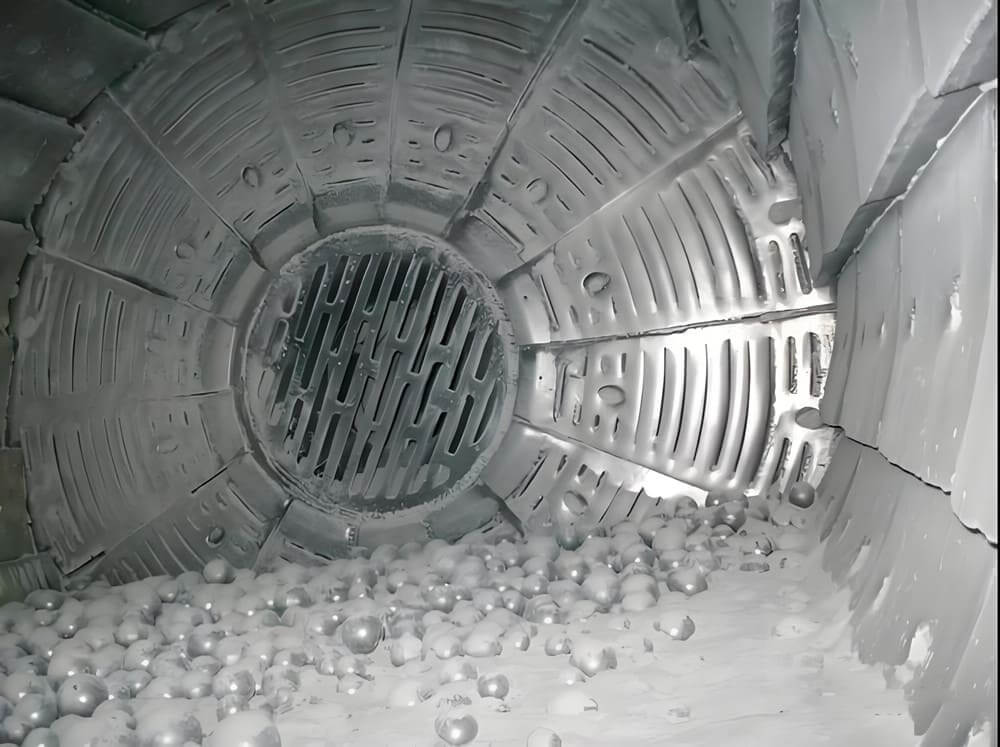
The operating principle of a ball mill involves steel balls being lifted under the combined influence of centrifugal force and gravity, subsequently cascading down to impact and grind the ore.
The ball charge ratio directly influences three key parameters
Steel Ball Drop Height: When the ball charge ratio is appropriate, the steel balls are lifted to an optimal height before falling in a parabolic trajectory, thereby concentrating their impact energy upon the ore. If the ratio is excessively high, the steel balls accumulate at the bottom of the mill; this reduces their lifting height and, consequently, diminishes the impact force. Conversely, if the ratio is too low, although the drop height of the steel balls may be significant, their insufficient quantity results in a reduced number of impact events per unit of time.
Steel Ball Motion State: The motion of steel balls within the mill can be categorized into three distinct states: cascading, cataracting (parabolic drop), and centrifuging. When the ball charge ratio is less than 30%, the steel balls primarily engage in a cascading motion, resulting in weak grinding action. When the ratio falls between 30% and 45%, both cataracting and cascading motions coexist, establishing a balance between impact and grinding actions. When the ratio exceeds 45%, the steel balls accumulate and become hindered in their parabolic trajectory, leading to a decline in grinding efficiency.
Mill Effective Power: The effective power consumption of the mill initially increases as the ball charge ratio rises, but subsequently declines. The ball charge ratio corresponding to this peak power point is considered the optimal ratio. An empirical formula for this is: Optimal Ball Charge Ratio = 0.7 to 0.8 × (Steel Ball Filling Rate). For grate-discharge ball mills, this value is typically set between 40% and 45%; for overflow-discharge ball mills, it is typically set between 35% and 40%.
Why Does Optimal Loading Ratio Vary Among Mill Types?
Last week, we debugged a 2.7m ball mill set at a standard 35% loading ratio, yet its output was 18% below expectation. Measurements revealed the root cause – mill type difference.
Optimal Ball Charge Ratios for Different Mill Types
Grate-type Ball Mills: Characterized by a rapid discharge rate and a low susceptibility to “bloating” (material accumulation); consequently, the ball charge ratio can be set at a relatively higher level. A range of 40%–45% is recommended. The grate plates facilitate forced discharge, ensuring that even with a slightly higher ball charge, the slurry is expelled promptly, preventing the steel balls from becoming excessively buried within the material.
Overflow-type Ball Mills: Discharge relies on the natural flow of the slurry; if the ball charge ratio is set too high, the slurry cannot be effectively discharged, leading to a tendency for the mill to “bloat.” A range of 35%–40% is recommended. Overflow-type mills are sensitive to the ball charge ratio; if it exceeds 40%, grinding efficiency tends to decline.
Conical Ball Mills: Positioned as an intermediate type between the two above, a range of 38%–42% is recommended.
Rod Mills: Unlike steel balls, steel rods behave differently within the mill; the rod charge ratio is typically maintained between 35% and 40%. Setting the ratio too high increases the risk of rod tangling or “jamming.”
Fine Grinding Mills (Regrinding): Since the feed material is already relatively fine, the ball charge ratio can be appropriately reduced to 30%–35%. This configuration prioritizes a grinding action while utilizing impact as a secondary mechanism.
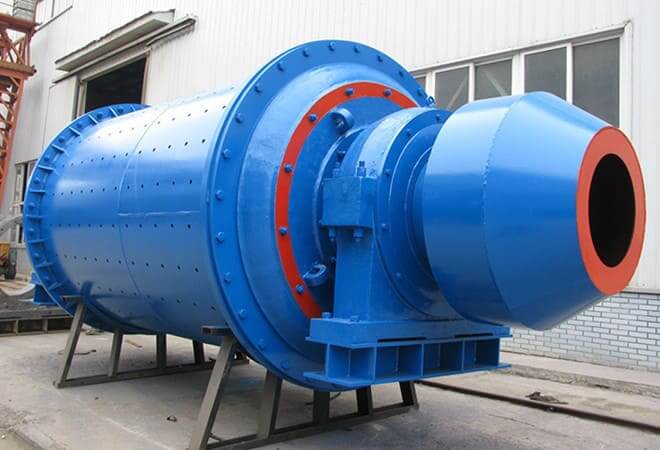
Differences in ball loading capacity among various types of ball mills primarily stem from variations in material properties and discharge methods. For a 2.7m diameter mill, every 1-ton ball difference changes power consumption by 5-8 kW.
Three Core Factors Affecting Loading Ratio
1. Mill Diameter
- ≤1.5m: Reduce loading by 2%-3%
- 5-3.5m: Standard loading range
- ≥3.5m: Increase loading by 1%-2%
2. Liner Type
Liner Type | Loading Adjustment | Reason |
Wave Liner | +1%-2% | Better ball lifting |
Step Liner | -1% | Enhanced impact |
Flat Liner | Standard | Basic configuration |
3. Material Properties
- Hard ore: +2%-3% loading
- Soft ore: -1%-2% loading
- Sticky material: -3%-5% loading
Our practice at a Inner Mongolia copper mine showed: increasing loading from 32% to 34.5% for porphyry copper (f=12-14) boosted hourly processing from 87t to 102t with only 4kW additional power.
What Serious Problems Does Overloading Cause?
A client insisted on 45% loading last year, resulting in severe “mill choking” within two weeks – output dropped 30%.
Damage from Overloading
- Abnormal mill current: When the ball loading rate exceeds 45%, the mill’s starting current rises sharply, while the operating current actually decreases. This is because the accumulation of steel balls reduces the drop height, thereby decreasing the motor load—this is not energy savings; it means the steel balls are not doing their job.
- Muffled mill noise:A normal mill produces a crisp sound of steel balls striking the shell. When overloaded, the steel balls cushion each other, causing the impact sound to become a low, muffled “hum,” as if the mill were covered with a blanket.
- Decreased grinding efficiency: Steel balls accumulate at the bottom of the cylinder, reducing the effective drop height and diminishing impact energy. Simultaneously, the gaps between the balls narrow, making it difficult for the slurry to pass through. As a result, the material remains in the mill for too long, leading to severe overgrinding.
- Coarser discharge particle size: Although overgrinding is severe, coarse particles are not ground finely due to insufficient impact energy. The content of -200 mesh particles in the discharge decreases, while the proportion of coarse particles increases.
- Accelerated liner wear: Steel balls accumulate at the bottom, increasing sliding friction and accelerating wear on the cylinder and end cap liners. In particular, grate plates are prone to cracking from impacts by steel balls.
- Wasted energy consumption: Motor output power is used to overcome friction between steel balls rather than for crushing ore. Electricity consumption per ton of ore increases by 15%–25%.
Actual test data: At a certain iron ore mill, the ball charge ratio of a grate-type ball mill was increased from 42% to 48%. The mill current dropped from 320A to 280A, the throughput decreased from 105 tons/hour to 85 tons/hour, and the power consumption per ton of ore rose from 18 kWh to 24 kWh.
What Are The Consequences of a Low Ball-Loading Ratio?
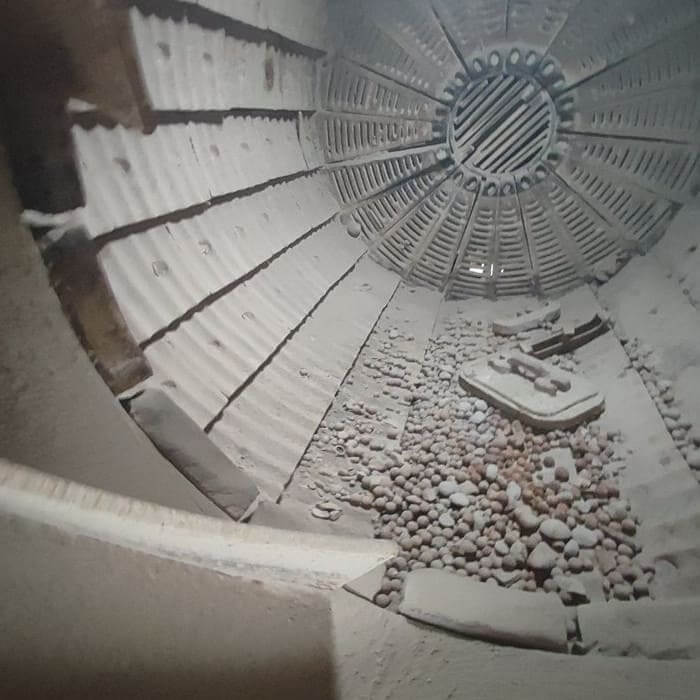
1. High impact energy but low frequency of ball drops: When the ball charge ratio is below 30%, although the drop height of the steel balls is high, the number of balls is insufficient, resulting in fewer impacts per unit time. This leads to low crushing efficiency for coarse particles and a coarse final product size.
2. Insufficient grinding surface area: The grinding surface area between steel balls and between steel balls and the liner is directly proportional to the ball charge ratio. A low-ball charge results in insufficient fine grinding capacity, and the -200 mesh content fails to meet requirements.
3. Exposed liners and accelerated wear: With fewer steel balls, the slurry and steel balls directly erode the liners, intensifying wear. At the same time, steel balls directly impact the exposed liners, causing pitting and fractures.
4. Excessively high mill current: When the ball loading rate is too low, the steel balls fall from a greater height, placing a heavy load on the motor and causing the current reading to rise. However, the grinding is not fine—the high current is a false indication.
5. Decreased mill efficiency: Throughput is low because the mill’s capacity is not fully utilized. Increasing the feed rate will immediately result in coarser discharge.
How to Accurately Determine Loading Ratio Onsite?
At a Yunnan zinc mine, workers gauged loading by “guessing weight from sound” – causing ±5% fluctuations.
Precise loading assessment requires: 1) Measuring ball surface-to-mill center distance during shutdown; 2) Calculating actual filling rate; 3) Verifying with current changes. The scientific formula: Loading(%)=(0.7854×D²×L×φ)/(π×D²×L/4)×100%, where φ (ball stacking angle) normally takes 55°.
Five-Step Field Diagnosis Method
1. Visual Inspection
- Check the ball surface after shutdown
- Ideal: 50-100mm below the centerline
- Underloading: >150mm gap
- Overloading: Level with or above the centerline
2. Current Comparison
Record current at different loads:
Load(t) | Current(A) | Output(t/h) |
20 | 185 | 65 |
22 | 198 | 72 ← Optimal |
24 | 215 | 68 |
3. Discharge Analysis
- Screen test +0.074mm content
- Normal range: 12%-18%
20%: Possible underloading
<10%: Possible overloading
4. Sound Diagnosis
- Normal: Clear impact sounds
- Overloaded: Dull rumble
- Underloaded: Metallic echoes
5. Wear Inspection
- Weekly ball diameter measurement
- Normal wear: φ100→φ95/month
- Abnormal: φ100→φ85/month
Our “Loading Ratio Quick Reference Chart” has been adopted by 30+ mines, improving debugging efficiency by 40%. Contact our technical department for the complete version.
Conclusion
Loading ratio is among ball mill’s most critical parameters, with optimal range typically 32%-38%. Wet mills need 3%-5% lower loading than dry mills, while large-diameter mills can slightly increase. Every 5% deviation may cause 15-20% output difference. Recommend monthly loading measurement combined with current, discharge size and ball wear analysis. Remember: More balls don’t equal better performance – finding the “golden balance point” maximizes economic returns.