Every mineral processing plant manager dreads the electricity bill from the ball mill. But you might not know that up to 30% of the power is actually wasted on ineffective work. At a copper mine, I reduced power consumption by 18% simply by adjusting a few parameters.
The five main reasons for high power consumption in ball mills are: overgrinding, improper steel ball ratio, low classification efficiency, unstable feed ore, and neglect of kWh-per-ton management. The real solution isn’t replacing equipment, but optimizing the existing system to make every kilowatt-hour generate more value. For example, proper rationing of steel balls can directly reduce energy consumption by 15-20%.
Reducing power consumption isn’t just about turning down the wattage. Like how constant braking wastes fuel when driving, ball mills have similar “energy traps”. Let’s break down these hidden power consumption points.
Reason 1: Over-grinding in Ball Mills Wastes Electricity
Many mineral processing plants continuously increase the grinding fineness in an effort to improve recovery rates. The logic is simple: the finer the grinding, the more complete the mineral liberation, and the better the flotation results are likely to be. However, the issue is that there is an ”optimum point” for grinding. This optimum point is typically determined through a comprehensive analysis that combines process mineralogy studies, single-mineral liberation analysis, grinding fineness tests, and changes in beneficiation indicators—rather than simply pursuing a specific fineness value. Beyond this point, further grinding does not lead to improved performance but rather to a waste of energy. During an audit at a gold mine, we discovered 35% of grinding energy was being used to re-grind already qualified product! That’s equivalent to burning $200,000 in electricity every month for nothing.
Overgrinding increases energy consumption by 30-50% because: 1) Qualified particles receive repeated force; 2) Increases media wear; 3) Reduces throughput. The key solution is controlling grinding fineness within optimal ranges (e.g., gold ore typically at 85-90% passing 200 mesh).
Energy Waste Mechanism of Overgrinding
1. Energy Distribution Analysis
| Energy Destination | Effective% | Waste% |
| Effective liberation | 55-65% | – |
| Overgrinding | – | 20-30% |
| Media friction heat | – | 10-15% |
| Mechanical loss | – | 5-10% |
2. Case Study Data
Iron mine before/after optimization:
- Overgrinding rate: 28% → 9%
- kWh/ton: 23.5 → 19.2
- Annual savings: $650,000
3. Solution Toolbox
Real-time monitoring: Online particle size analyzer (hourly tests replacing manual 4-hour checks)
Control strategy: If fineness > target: Reduce feed rate by 10%; Adjust classifier speed
Reason 2: Improper Steel Ball Ratio in Ball Mills Wastes Electricity
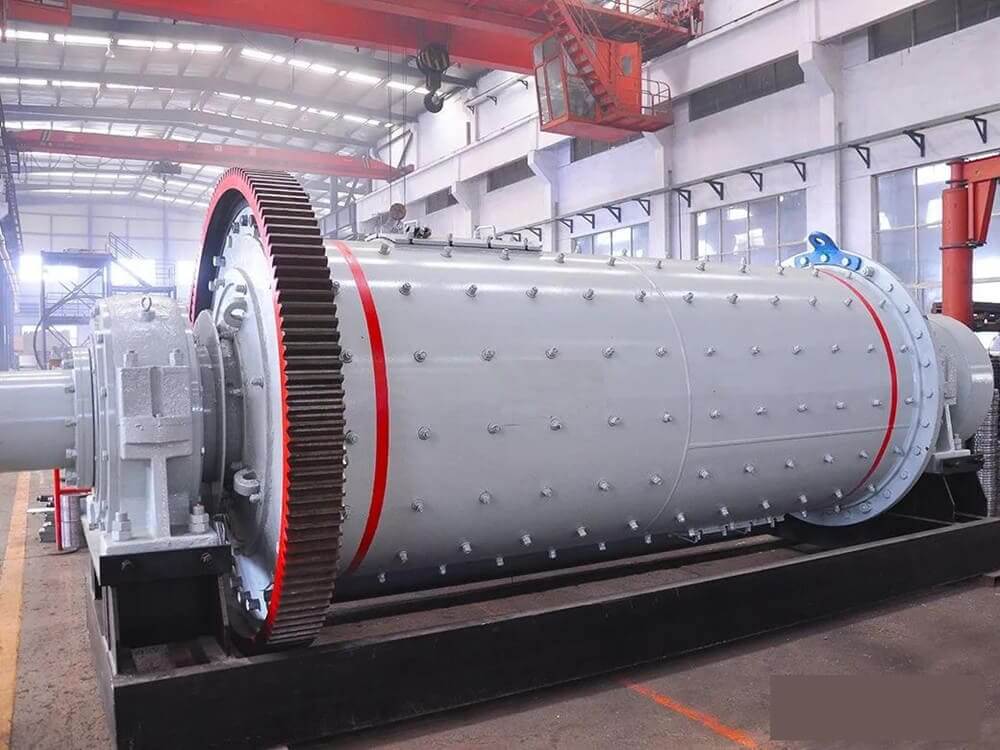
When making on-site adjustments to ball mills, the first instinct is often to add more steel balls. The result is that the number of steel balls keeps increasing, the mill becomes heavier, and the current rises, yet the increase in production capacity is limited. The wrong ball ratio is like chopping trees with a kitchen knife – all effort, no result.
A proper steel ball ratio should ensure: large balls for crushing, small balls for grinding. A typical ratio is Φ100:Φ80:Φ60:Φ40=30:25:25:20. An improper ratio causes: 1) Low crushing efficiency; 2) Fast liner wear; 3) 10-25% power increase.
Scientific Ratio Implementation
1. Ore Hardness Matching
| Ore Hardness | Max Diameter(mm) | Large Ball% |
| Soft (Quartz) | 60-80 | 40% |
| Medium (Iron) | 80-100 | 50% |
| Hard (Copper) | 100-125 | 60% |
2. Dynamic Adjustment
- Replenishment cycle: Weekly for large balls (faster wear); monthly full ratio check
- Replenishment formula:kg = initial charge × wear rate (1.0-1.5%/day) × days
3. Performance Indicators
- Current fluctuation range ↓30%
- Product size deviation ↓40%
- Liner life ↑35%
Reason 3: Low Classification Efficiency Causes The Mill to Waste Electricity
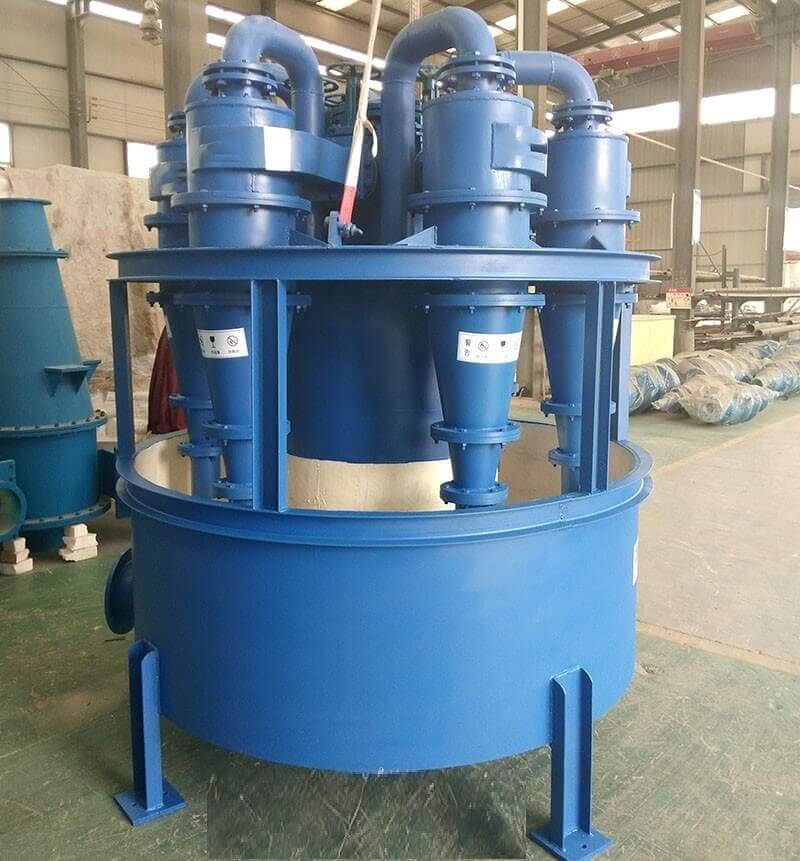
Low classification efficiency leading to the mill performing “repetitive work” is an issue frequently overlooked by many mineral processing plants. The ideal process involves coarse particles entering the mill, with properly sized material being discharged promptly and only the coarse fraction returned for further grinding. If the classification equipment lacks sufficient separation efficiency, particles that already meet the required size specifications are cycled back into the mill. Consequently, the mill continuously processes material that has already been sufficiently ground—a phenomenon known as “over-grinding” or “repetitive grinding.” The hallmark of this situation is that the mill appears to be working hard, yet actual production capacity remains stagnant.
Common on-site symptoms include: high circulating loads, excessive sand return, elevated mill motor current, and fluctuations in the fineness of the classification overflow. When faced with high power consumption, many operators immediately inspect the mill itself, whereas the root cause may actually lie with the hydrocyclones.
Reason 4: Fluctuations in Feed Rate Cause Ball Mills to Operate at Low Efficiency
Fluctuations in ore feed keep the mill operating at low efficiency for extended periods.
What is the greatest challenge for a ball mill? It is not operating at full load, but rather instability. One of the key factors affecting grinding stability is fluctuation in the ore feed.
At many processing plants, the ore is hard in the morning and soft in the afternoon; feed rates fluctuate, requiring constant adjustments to mill parameters. Consequently, operators are perpetually chasing performance targets, yet the mill fails to run stably—simply because the grinding process requires a steady state.
Variations in ore feed impact mill load, grinding slurry concentration, the motion of the grinding media (steel balls), and discharge particle size.
Ultimately, this results in higher specific energy consumption per unit of ore processed. Therefore, advanced processing plants do not control energy consumption by constantly tweaking parameters; instead, they prioritize minimizing fluctuations.
Reason 5: Focusing On Motor Power While Overlooking Specific Energy Consumption Per Ton of Ore
On-site personnel often assume that low mill current indicates energy savings. In reality, however, if the processing throughput drops significantly, the specific energy consumption per ton of ore may actually increase. This is because monitoring current fluctuations alone does not reflect changes in energy consumption relative to throughput. The true metric to focus on is the amount of electricity consumed per unit of processed ore; ultimately, mining operations are concerned with the cost per ton of ore, not merely the readings on the motor’s power meter.
For a mature grinding system, performance evaluation criteria should include: hourly throughput, grinding fineness, circulating load, changes in recovery rates, and specific energy consumption per ton of ore. Only through a comprehensive assessment can the actual issues be identified.
Conclusion
Ball mills are among the most energy-intensive pieces of equipment in mineral processing plants, but high electricity consumption does not necessarily indicate outdated technology. Often, the real issue is not that “the machine uses too much electricity,” but rather that “electricity is being wasted where it does not generate value.” Effective grinding control does not mean making the ball mill work harder; rather, it means ensuring that every kilowatt-hour of electricity is converted as much as possible into effective liberation and actual output. Reducing electricity consumption is not fundamentally about saving electricity, but about improving the efficiency of the entire mineral processing workflow.
Ball mill energy saving equals precise energy management:
- Eliminate overgrinding (20-30% saving)
- Proper steel ball ratio (15-20%)
- Improve classification (10-15%)
- Stabilize feed (5-8%)
- Establish kWh/ton KPI (5-10%) Optimized plants achieve 18-25% kWh/ton reduction, saving $3-5/ton.
Remember: Saved electricity is pure profit!