Grinding is one of the most energy-intensive operations in mineral processing plants. From crushing and grinding to classification and mineral separation, electricity consumption has a significant impact on overall production costs. In many mineral processing operations, grinding accounts for a substantial proportion of total plant electricity consumption.
For plants operating ball mills, SAG mills, or other grinding equipment, even a small improvement in grinding efficiency can translate into considerable electricity cost savings over time.
However, reducing grinding mill energy consumption does not simply mean lowering motor power or reducing the amount of ore processed. The real objective is to minimize energy consumption per tonne of ore while maintaining the required throughput, product particle size, and mineral liberation.
So, what grinding machines are commonly used in mineral processing? How is specific grinding energy consumption calculated? What causes high energy consumption in a ball mill, and what practical measures can operators take to improve efficiency?
This article explores the main grinding equipment, energy consumption calculations, common causes of inefficiency, and practical strategies for reducing grinding energy costs.
What Are the Main Grinding Machines Used in a Mineral Processing Plant?
Mineral processing plants use different types of grinding equipment depending on ore hardness, feed particle size, required product fineness, processing capacity, and circuit configuration.
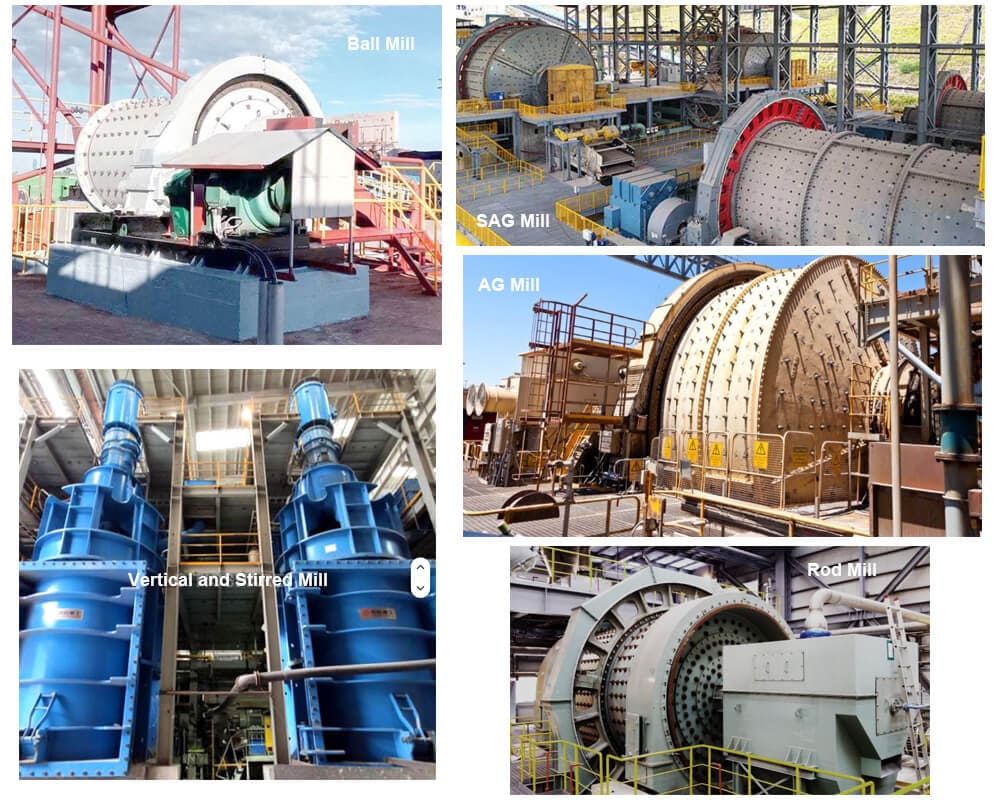
The most common grinding machines include the following.
Ball Mills
Ball mills are widely used in mineral processing plants for secondary and fine grinding.
They use steel or other grinding media to reduce ore particle size through impact and abrasion. As the mill rotates, the grinding media are lifted and then fall or cascade through the material, breaking ore particles into smaller sizes.
Main applications
- Grinding crushed ore to the required particle size.
- Preparing mineral particles for flotation or leaching.
- Operating in open-circuit or closed-circuit grinding systems.
Ball mill energy consumption is affected by grinding media size distribution, mill loading, liner design, ore hardness, and operating conditions.
Semi-Autogenous Grinding (SAG) Mills
SAG mills use a combination of ore particles and a smaller quantity of grinding media, usually steel balls, to achieve particle size reduction.
They are commonly used for primary grinding and can handle relatively coarse feed material.
Main applications
- Primary grinding of run-of-mine or crushed ore.
- Processing large quantities of hard and medium-hard ores.
- Reducing the need for multiple conventional crushing and grinding stages in suitable circuits.
SAG mill energy consumption depends on ore competency, feed-size distribution, mill filling, operating speed, and grinding circuit configuration.
Autogenous Grinding (AG) Mills
AG mills use the ore itself as the grinding medium, without adding steel grinding balls.
The grinding process relies on the impact and abrasion between large ore particles.
Main applications
- Primary grinding where ore characteristics are suitable.
- Processing ores that can provide sufficient grinding action through particle-on-particle contact.
AG mills can reduce grinding media consumption, but their performance is highly dependent on ore characteristics and feed-size distribution.
Rod Mills
Rod mills use long steel rods as grinding media. The rods provide a relatively uniform grinding action and can reduce excessive production of fine particles under suitable operating conditions.
Main applications
- Coarse grinding.
- Preparing feed for subsequent ball milling.
- Processing materials where a relatively controlled product-size distribution is desirable.
Vertical and Stirred Mills
Vertical and stirred mills use mechanical agitation to move grinding media and ore particles within a grinding chamber.
They are commonly used for fine and ultrafine grinding, particularly when conventional ball milling becomes less energy-efficient.
Main applications
- Fine grinding of mineral concentrates.
- Ultrafine grinding for improved mineral liberation.
- Regrinding in flotation circuits.
The selection of grinding equipment should be based on ore properties, target particle size, required capacity, and total operating costs rather than equipment power consumption alone. Different grinding technologies have different energy, liner, and media requirements.
How Is Specific Grinding Energy Consumption Calculated?
Specific grinding energy consumption is calculated by dividing the relevant grinding circuit electricity consumption by the tonnes of ore processed over the same measurement period.
Formula:
Specific grinding energy consumption (kWh/t) = Grinding circuit electricity consumption (kWh) ÷ Ore throughput (t)
For reliable comparisons, use consistent electrical measurement boundaries and throughput data, and account for relevant differences in ore hardness, feed size, and product fineness.
How Much Electricity Can Grinding Mill Optimization Save?
Savings depend on the initial operating condition and the effectiveness of the corrective measures. Illustrative estimates of 5%–15% reductions may be used for preliminary scenario analysis when a significant inefficiency exists, but they should not be treated as universal industry benchmarks or guaranteed outcomes.
What Causes High Specific Energy Consumption in a Grinding Mill?
Specific energy consumption (SEC) measures how much electricity is required to process one tonne of ore. It is commonly expressed in kilowatt-hours per tonne (kWh/t).
The grinding mill with high specific energy consumption may be experiencing several operational or mechanical inefficiencies.
Common causes include worn mill liners, unsuitable grinding media size distribution, incorrect mill loading, changes in ore hardness, unstable feed conditions, and inefficient classification. High kWh/t should be investigated alongside throughput and product fineness rather than attributed to a single component.
For a closer look at the less obvious factors affecting grinding costs, read Grinding Mill Energy Consumption: 3 Hidden Cost Drivers.
How to Reduce Grinding Energy Consumption in Mineral Processing Plants?
For a grinding mill without an immediate mechanical failure, the most practical approach is to investigate operating conditions first, followed by grinding media and liner condition.
This sequence prioritizes relatively low-cost adjustments before more disruptive maintenance work.
If the mill has cracked liners, severe overload, abnormal vibration, or another safety-critical fault, address the problem immediately rather than following the sequence mechanically.
Step 1: Stabilize the Grinding Load
Start by reviewing the mill’s operating parameters and identifying deviations from established operating targets.
Important parameters include:
- Ore feed rate and feed particle-size distribution.
- Mill power consumption and motor current.
- Slurry concentration and flow rate, where applicable.
- Product fineness and circulating load.
- Throughput relative to the established operating target.
Make controlled adjustments to feed rate and other operating conditions.
Avoid reducing feed simply to lower motor current. A lower power draw does not necessarily indicate better grinding efficiency if production throughput also decreases.
The objective is to maintain stable production while reducing energy consumption per tonne of processed ore.
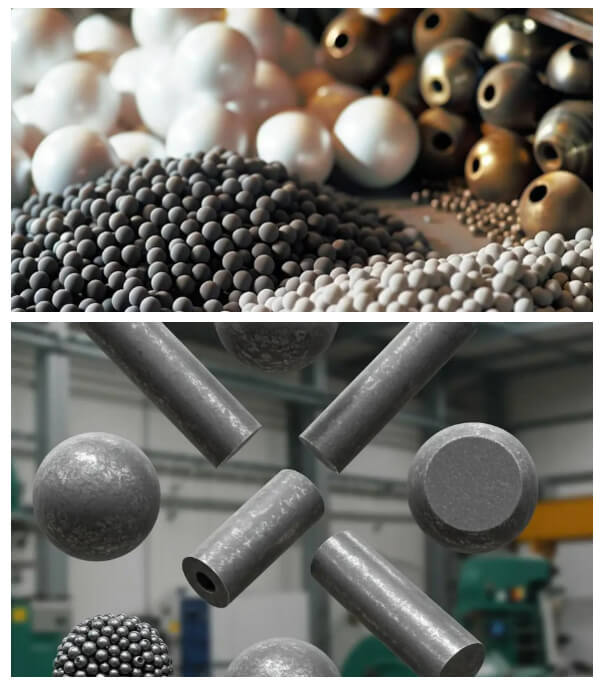
Step 2: Review and Optimize Grinding Media
Grinding media condition and distribution directly affect energy transfer inside a mill.
Operators should review media replenishment records and periodically measure the actual media size distribution.
Recommended actions include:
- Removing broken and excessively worn grinding media during planned shutdowns.
- Correcting obvious imbalances in grinding ball size distribution.
- Establishing a consistent grinding media replenishment procedure.
- Monitoring media consumption and its relationship with grinding performance.
Any changes to media specifications or replenishment practices should be evaluated against three key indicators: specific energy consumption, throughput, and product fineness.
Step 3: Inspect Mill Liners and Lifter Profiles
If grinding load and media distribution are appropriate but performance remains poor, inspect the mill liners.
Measure liner wear against the original liner profile and manufacturer specifications.
Pay particular attention to:
- Lifter height and profile changes.
- Uneven liner wear.
- Damaged or loose liner components.
- Changes in grinding media movement.
- Potential improvements in liner material and design.
Replacing worn liners at the appropriate time can help restore grinding performance and protect the mill shell.
Operators can also evaluate alternative liner profiles or materials to improve grinding efficiency and service life.
However, liner modifications should be based on equipment-specific engineering recommendations and actual operating data rather than assumptions about energy savings.
Step 4: Verify Energy Savings with Operating Data
After implementing optimization measures, compare operating performance before and after the changes.
The comparison should use reasonably similar operating conditions to avoid misleading conclusions.
Record at least the following information:
| Operating Indicator | Measurement |
| Grinding circuit electricity consumption | kWh |
| Dry ore throughput | Tonnes |
| Specific grinding energy consumption | kWh/t |
| Feed particle-size distribution | Particle size |
| Product particle-size distribution | Particle size |
| Ore hardness or grindability | Relevant test indicators |
| Operating hours | Hours |
| Process conditions | Mill loading, slurry concentration, circulating load |
A reduction in electricity consumption is meaningful only when the plant continues to achieve the required throughput and product fineness.
If electricity consumption decreases but product fineness deteriorates or throughput falls significantly, the optimization may not represent a genuine improvement in overall grinding performance.
Quick Reference: Grinding Mill Energy Consumption Troubleshooting
The following table summarizes common operating symptoms, potential causes, and initial corrective actions.
| Observed Symptom | First Checks | Other Possible Causes | Initial Corrective Action |
| High current, low throughput, coarse product | Feed rate and media distribution | Higher ore hardness, poor classification | Verify mill loading and inspect media distribution |
| Lower power draw, coarse discharge, dull mill sound | Potential overload and liner wear | Feed-size changes, discharge problems | Check feed rate, internal loading, and liner condition |
| Stable current, fluctuating product fineness | Media distribution and broken balls | Variable feed size, unstable classification | Inspect media and stabilize the grinding circuit |
| Rising kWh/t despite stable production targets | Mill power, throughput, and operating conditions | Ore variability, equipment wear, process bottlenecks | Establish a baseline and investigate energy losses |
This table is intended for preliminary troubleshooting. Operators should confirm suspected causes through process measurements and equipment inspections before making major operating changes.
Conclusion
Reducing grinding mill energy consumption is an important way for mineral processing plants to control electricity costs and improve overall production efficiency.
However, achieving meaningful energy savings requires more than simply reducing mill power consumption. Plants must consider equipment selection, ore characteristics, grinding media distribution, liner condition, and grinding circuit operating parameters.
A practical optimization strategy should prioritize:
- Selecting suitable grinding equipment for the ore and required product size.
- Monitoring specific grinding energy consumption.
- Identifying the causes of excessive energy consumption.
- Stabilizing grinding load and feed conditions.
- Optimizing grinding media distribution and replenishment.
- Inspecting mill liners and lifter profiles regularly.
- Verifying improvements through comparable operating data.
Ultimately, the goal is to process more ore, achieve the required product fineness, and consume less electricity per tonne.
With systematic monitoring and appropriate equipment maintenance, mineral processing plants can improve grinding efficiency, reduce operating expenses, and achieve more sustainable long-term production.