In the competitive world of mineral processing, energy efficiency isn’t just about sustainability—it’s a critical factor determining operational profitability. While grinding mills are essential for liberating valuable minerals, they can silently drain profits through hidden inefficiencies that often go unnoticed. Many plant operators focus on visible costs like liner replacements or media consumption, overlooking how these elements interact to create systematic energy waste. Understanding these dynamics is the first step toward unlocking substantial cost savings.
How Much Electricity Does Grinding Consume in a Mineral Processing Plant?
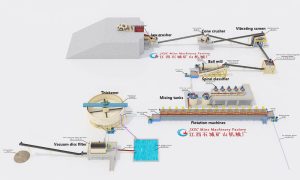
In conventional crushing–grinding–flotation operations, grinding is often one of the most energy-intensive stages of mineral processing.
Grinding energy consumption is commonly measured as specific energy consumption (SEC), expressed in kilowatt-hours per tonne of ore (kWh/t).
For example, a plant with total electricity consumption of 24 kWh/t and a grinding energy share of 60% has a grinding SEC of:
24 kWh/t × 60% = 14.4 kWh/t
The actual proportion varies with the processing flowsheet. Autogenous and semi-autogenous grinding circuits, gravity separation plants, and magnetic separation plants may have significantly different energy profiles.
The key question is not simply how much electricity a mill consumes, but how efficiently that electricity is converted into the required particle size and mineral liberation.
Three equipment and operating issues deserve particular attention.
1. Worn Mill Liners: Reduced Grinding Efficiency and Higher Energy Costs
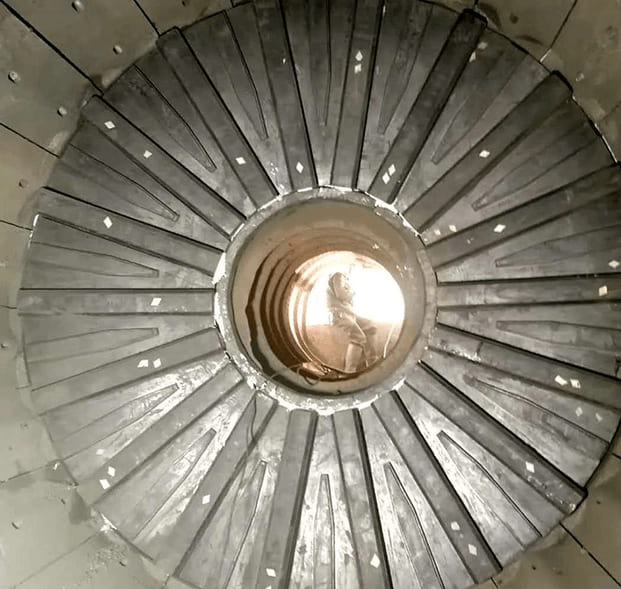
Why do worn ball mill liners increase energy consumption?
Mill liners protect the mill shell and help lift grinding media to an appropriate height. As liners and lifter bars wear down, their ability to lift the grinding media can deteriorate.
This changes the motion of the grinding media and may reduce the effective impact and grinding action inside the mill. The motor can continue drawing substantial power even when grinding performance declines.
In other words, the mill may consume nearly as much electricity while producing less tonnage or failing to achieve the target product fineness.
This problem can be particularly noticeable in grid-type ball mills processing moderately hard sulfide ores, although the extent of the impact depends on liner design, mill speed, ore characteristics, and operating conditions.
Warning signs of excessive liner wear
Look for the following operating symptoms:
- Changes in mill sound: The impact sound becomes duller or less distinct.
- Declining throughput: Tonnes processed per hour decrease despite relatively stable operating conditions.
- Coarser product: The discharge becomes coarser, or the target grinding fineness becomes harder to maintain.
- Unchanged power consumption: Electrical demand remains high even as grinding performance deteriorates.
Motor current alone is not a reliable measure of grinding efficiency. Operators should evaluate it alongside mill power, throughput, feed characteristics, and product particle size.
How can a plant reduce energy waste from worn liners?
- Inspect liner and lifter profiles at planned shutdowns.
- Compare measured lifter height against the original design and the manufacturer’s wear limits.
- Replace liners when they reach the specified service limit rather than waiting for cracks, breakage, or severe performance deterioration.
- Evaluate liner materials and profiles according to ore abrasiveness, impact conditions, and mill operating requirements.
High-manganese steel and rubber liners are both used in mineral processing, but neither is universally superior. The appropriate choice depends on mill design, operating conditions, wear mechanisms, and lifecycle cost.
Potential energy-saving opportunity: In a mill operating with severely worn liners, restoring the liner profile may reduce grinding energy consumption by an illustrative 8%–12% if the wear is a major source of inefficiency. This range should be validated through site measurements rather than treated as a guaranteed outcome.
2. Incorrect Grinding Media Size Distribution: High Power Draw, Low Grinding Effectiveness
Why does grinding media size distribution matter?
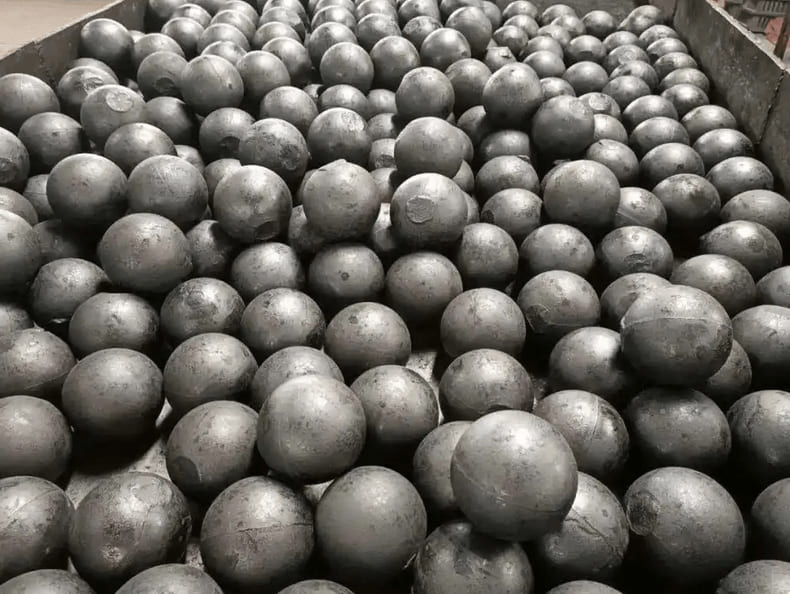
Grinding media must be appropriately matched to ore hardness, feed particle size, mill dimensions, and target product fineness.
Large balls provide greater impact energy and are generally useful for breaking coarser particles. Smaller balls provide more contact points and can improve the grinding of finer particles.
If the media size distribution is poorly matched to the grinding task, the mill may consume substantial energy without achieving the desired size reduction efficiently.
For example:
- Too few suitably sized large balls may limit the breakage of coarse particles.
- An unsuitable proportion of small balls may reduce effective coarse-particle breakage.
- Excessive quantities of worn, broken, or undersized media can alter the intended grinding media distribution.
- An inappropriate media charge may contribute to unstable product fineness and inefficient grinding.
The optimum media distribution depends on the grinding stage. Primary grinding and secondary grinding generally have different requirements, and closed-circuit operations must also account for the classification system.
How to recognize grinding media problems?
Common warning signs include:
- High motor current without a corresponding increase in throughput.
- Fluctuating discharge particle size.
- Frequent steel ball additions with little improvement in grinding performance.
- Excessive broken or deformed grinding media found during mill inspections.
Where practical, operators should assess the actual media size distribution during planned shutdowns and compare it with the established operating specification.
Discharge screening can help identify particle-size fluctuations, but it cannot independently confirm an incorrect ball charge. Feed size, ore hardness, classifier performance, and circulating load must also be considered.
How to optimize the grinding media charge?
A practical optimization program should include:
- Establishing a baseline of ore hardness, feed size, target fineness, throughput, and mill power.
- Reviewing the initial ball size and the intended grinding media size distribution.
- Standardizing grinding media replenishment by size and mass.
- Removing broken or severely worn media during scheduled inspections.
- Evaluating changes through controlled operating trials.
Media replenishment and mill cleaning intervals should be determined by actual wear rates, inspection findings, and production requirements rather than a fixed calendar alone.
Potential energy-saving opportunity: Where grinding media distribution is significantly out of balance, optimization may deliver an illustrative 5%–10% reduction in grinding SEC. Results will vary, and the benefit should be verified while maintaining the required product fineness and recovery performance.
3. Incorrect Mill Loading: Underloading and Overloading Both Waste Energy
What is the ideal operating load for a ball mill?
A ball mill operates most efficiently within a suitable range of media charge, ore load, slurry concentration, and feed rate.
Two common problems are underloading and overloading.
Underloading:
When the mill receives too little ore relative to its grinding media charge, the grinding media may collide without performing enough useful particle breakage. The mill consumes electricity but processes too little material, increasing energy consumption per tonne.
Overloading:
When the mill receives more material than it can grind effectively, material transport and grinding conditions can deteriorate. In wet grinding circuits, excessive loading may contribute to a high internal material inventory, coarser discharge, or a condition commonly described as mill overload or, in severe cases, mill choking.
The relationship between motor current and mill load is not universal. Depending on the mill and operating conditions, an overloaded mill may show a reduction in power draw, but operators should not diagnose overload from current alone.
Key indicators of incorrect mill loading
Operating symptom | Possible explanation | Recommended checks |
High current and low throughput | Underloading, poor media distribution, or other grinding inefficiencies | Feed rate, mill power, media charge, and ore hardness |
Lower power draw with coarser discharge | Possible overload or deteriorating grinding conditions | Feed rate, internal loading, discharge behavior, and classifier operation |
Stable current but fluctuating product fineness | Feed variability, media imbalance, or classification instability | Feed particle size, ore properties, and classification efficiency |
Rising energy consumption per tonne | Reduced throughput or declining grinding efficiency | Power consumption, throughput, product size, and circulating load |
These are diagnostic clues, not definitive fault identifications. Several problems can produce similar symptoms.
How to optimize mill loading?
- Stabilize the feed rate and avoid unnecessary fluctuations.
- Monitor slurry concentration and flow conditions in wet grinding circuits.
- Track mill power, throughput, and product particle size together.
- Establish an operating window based on mill design, ore grindability, and plant performance tests.
- Coordinate mill operation with classification equipment to prevent unstable circulating loads.
Some conventional closed-circuit grinding operations may operate within a feed rate of approximately 70%–90% of design capacity, but this is only a preliminary reference range. It is not a universal optimum, and the correct operating point must be established for the specific circuit.
Potential energy-saving opportunity: If a mill is operating substantially outside its efficient loading range, correcting the mismatch may produce an illustrative 10%–15% reduction in grinding SEC under favorable conditions. Throughput may also improve, but the actual result must be confirmed by operating data.
Conclusion
These three areas—mill liner condition, media distribution, and operating load—represent a golden triangle of grinding efficiency. Addressing them requires more than periodic maintenance; it demands an integrated approach that combines real-time monitoring, preventive planning, and continuous optimization. Plants that systematically track these variables often discover they’ve been paying for expensive electricity that never translated into productive grinding work.
The path to optimization starts with recognizing that energy efficiency isn’t a one-time project; it’s an operational mindset. By transforming how you monitor and maintain these three key areas, your mill can achieve the delicate balance where every kilowatt-hour contributes directly to mineral liberation—not hidden inefficiencies. The potential savings are too significant to ignore, especially when simple corrective actions can simultaneously improve throughput, product quality, and equipment longevity. In today’s energy-conscious market, these improvements aren’t just operational enhancements—they’re competitive advantages waiting to be claimed.