Have you ever wondered how modern mining operations efficiently separate valuable minerals from waste rock? The answer lies in XRT sorting technology – a game-changing method that’s transforming mineral processing.
XRT (X-ray Transmission) sorting technology uses X-ray absorption differences to identify and separate materials based on their atomic density, allowing precise ore sorting without chemicals or water. This dry processing method offers environmental and economic benefits over traditional techniques.
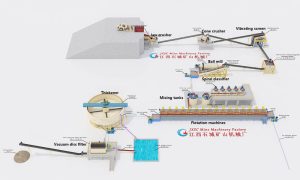
Many operations still rely on wet processing methods that consume massive amounts of water. XRT technology provides a sustainable alternative that’s changing how we think about mineral recovery.
What is The Principle of X-ray Absorption?
X-ray absorption might sound complex, but the basic principle is surprisingly straightforward. Think about how different materials block X-rays at your doctor’s office.
The XRT sorting process works because different minerals absorb X-rays differently based on their atomic number and density, creating distinct signatures that the system can identify and use for sorting. Heavy elements like tungsten absorb more X-rays than lighter materials like quartz. The core of the system responsible for data acquisition comprises an X-ray source and a detector. Depending on the data processing method, X-ray sorters fall into two main categories: one analyzes the characteristic X-ray spectra emitted by the ore upon excitation, while the other focuses on processing transmission projection images obtained after X-rays pass through the ore.
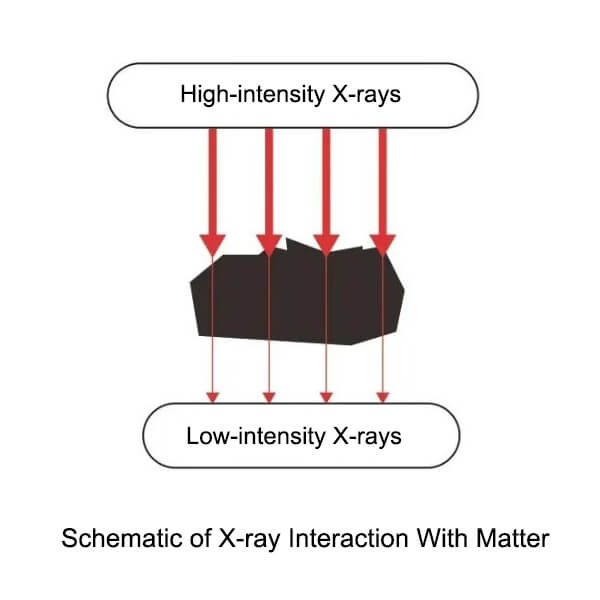
Let’s break down the physics behind XRT sorting in more detail:
Key factors affecting X-ray absorption
| Factor | Effect on Absorption | Example |
| Atomic number | Higher numbers absorb more | Lead (82) vs Aluminum (13) |
| Density | Denser materials absorb more | Galena (7.5 g/cm³) vs Quartz (2.65 g/cm³) |
| Thickness | Thicker samples absorb more | 10mm vs 50mm samples |
| X-ray energy | Higher energy penetrates better | 100keV vs 200keV beams |
The system precisely measures these absorption differences to distinguish between valuable ore and waste material, enabling accurate sorting decisions in real-time.
What’s The Structure and Basic Principles of XRT Intelligent Sorting Equipment?
When you first see an XRT sorting machine, the complex appearance might seem daunting. But the core components work together in a logical sequence.
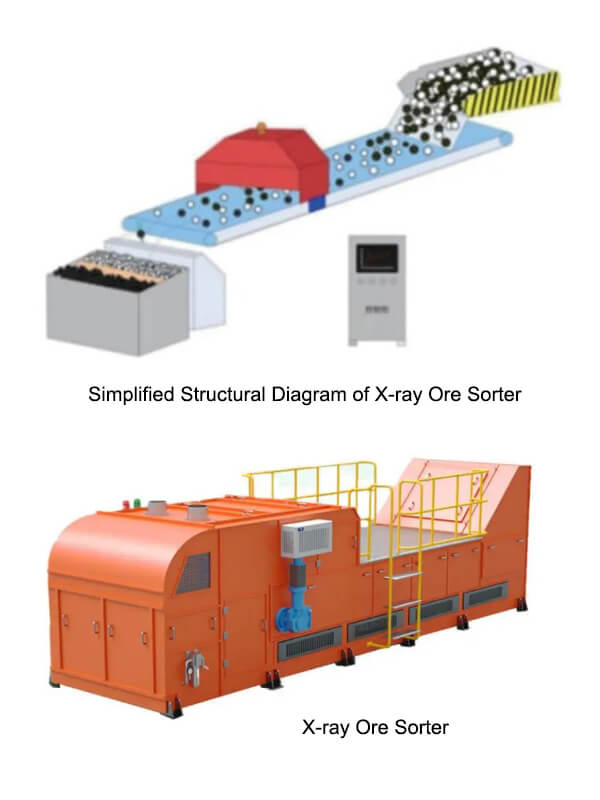
An X-ray transmission sorter is a device based on sensor-based sorting principles. It utilizes high-precision AI algorithms and a deep learning network for X-ray signal recognition to identify all types of ores and accurately detect their internal composition. The device primarily consists of four components: a material conveying system, an X-ray inspection system, an intelligent centralized control system, and an executive sorting system.
The intelligent sorting equipment achieves efficient sorting through the coordinated operation of four major modules. The material conveying system (including a feeder, chute, and conveyor belt) first ensures that the material is distributed evenly in a single layer. The signal detection system (comprising an X-ray generator, a receiver, and an optional vision imaging unit) then captures data on the ore’s characteristics. This data is processed and intelligently identified in real time by the algorithm system, and the resulting commands ultimately drive the actuators—comprising an industrial PC, a controller, and pneumatic valves—to achieve precise separation of minerals from waste rock.
What Are The Principles Behind Intelligent Control Systems and Recognition?
Modern sensors are the eyes of intelligent sorting machines. They need to measure materials quickly, without contact, and with good accuracy – all at a reasonable cost. This is where sensor technology makes all the difference.
The intelligent control system combines multiple sensors with powerful computer algorithms to analyze materials in great detail, making accurate sorting decisions in milliseconds. Modern systems can handle different material types while adapting to changing conditions.
Let’s examine both the hardware and software components that make this possible:
1. Hardware Configuration
Intelligent sorting systems require sensors that provide real-time, non-destructive, and non-contact measurements with high spatial and spectral resolution at reasonable cost. Recent developments have expanded sensing technologies from visible light to near-infrared (NIR), X-rays, synchrotron X-rays (sXRF), neutrons, and gamma rays. These technologies improve image quality, material penetration, and mineral identification.
Several advanced sensors are now used in mineral sorting. X-ray fluorescence (XRF) provides high-resolution chemical analysis and can identify small mineral structures. Multi-channel laser (MCL) sensing is effective for identifying quartz and has been used in quartz-gold ore and high-purity quartz processing. Prompt gamma neutron activation analysis (PGNAA) provides strong penetration and is mainly used to determine elemental composition in lump ores, although its measurement time and detection limits vary with ore type. Magnetic resonance (MR) can identify target minerals inside small ore particles without surface cleaning or strict particle-size control. Laser-induced breakdown spectroscopy (LIBS) enables rapid online analysis of elements such as manganese and silicon, while laser-induced fluorescence (LIF) provides highly sensitive real-time detection, including phosphorus in iron ore. Beta-delayed neutron analysis is mainly used to estimate uranium content and correct errors caused by uranium-radium disequilibrium.
Table: Applications of Common Sensor-Based Information Acquisition Technologies in Ore Sorting
| Sensor Type | Abbreviation | Detection Principle | Applicable Ores/Minerals |
| X-ray Transmission | XRT | X-ray attenuation coefficient | Base metals, precious metals, coal, diamonds, etc. |
| X-ray Fluorescence | XRF | Elemental composition | Base metals, precious metals |
| X-ray Luminescence | XRL | Visible light induced by X-rays | Diamonds |
| Visible Light / Color Sorting | VIS/Color | Visible-light reflection and absorption | Base metals, precious metals, gemstones, industrial minerals |
| Near-Infrared | NIR | Near-infrared reflection and absorption | Base metals, industrial minerals |
| Thermal Infrared | TIR | Microwave and thermal-infrared detection | Base metals, precious metals |
| Laser Triangulation | 3D | Shape detection | Base metals, precious metals |
| Prompt Gamma Neutron Activation Analysis | PGNAA | Absorption and emission of prompt gamma rays | Ferrous metals |
| Laser-Induced Breakdown Spectroscopy | LIBS | Material vaporization | Industrial minerals |
Multi-sensor fusion has become an important development. Systems such as dual-energy X-ray transmission (DE-XRT), NIR-XRT, microwave-infrared thermography (MW-IRT), and PGNAA-XRF combine complementary information to improve sorting accuracy. DE-XRT, for example, uses two X-ray energy levels to obtain particle-independent features and is suitable for polymetallic ores and minerals with similar densities to gangue. In a low-grade lead-zinc mine in Guangxi, a three-stage DE-XRT process achieved a waste rejection rate of 34.05%, while lead and zinc losses were limited to 2.41% and 1.61%, respectively.
Sorting equipment is also developing in two directions: compact, mobile systems for flexible deployment and large, high-capacity systems that use simulation and intelligent control to reduce operating costs. At the Karowe diamond mine in Botswana, increasing XRT sorter capacity nearly quintupled feed efficiency while reducing investment and operating costs by about 50%.
2. Software Components
Advanced algorithms improve recognition accuracy, response speed, and sorting efficiency while reducing computing requirements. For XRF sorting, researchers have combined peak-to-background analysis, single-point analysis, PGNAA, and XRF data to improve ore-grade prediction. Fractal-based models have also been used to better describe the structural heterogeneity of ores and improve sorting decisions.
For image and color sorting, methods such as median filtering, edge detection, K-means clustering, and convolutional neural networks (CNNs) are widely used. These techniques help reduce the effects of dust, fine particles, and changing lighting conditions. The SUSAN edge-detection algorithm, for example, has been used for tungsten ore image segmentation. K-means clustering has also shown good performance in potassium feldspar sorting.
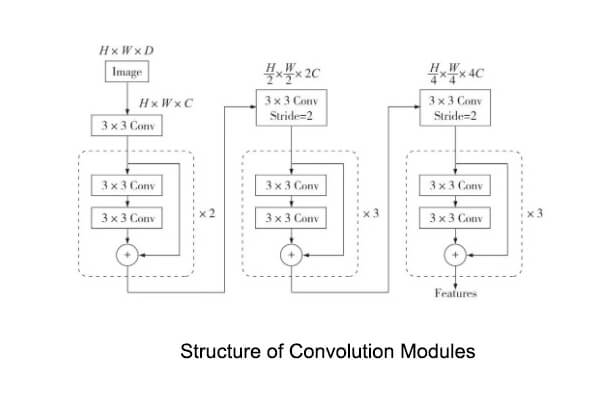
CNNs are particularly effective because they automatically extract color, texture, and other complex features. Compared with traditional color- and grayscale-based methods, CNN-based systems generally provide better recognition accuracy and adaptability. For coal-gangue sorting, CNN models can identify differences in color and texture even under dusty or unstable lighting conditions.
Overall, intelligent sorting systems are increasingly integrating model predictive control (MPC), machine learning, and remote control technologies. These tools allow systems to respond to changes in ore properties and operating conditions, supporting adaptive optimization and more efficient, automated mineral sorting.
Conclusion
XRT intelligent sorting technology represents a significant advancement in mineral processing, using X-ray absorption principles to identify and separate materials based on their atomic characteristics. From its core components to the sophisticated control systems, XRT sorting offers mining operations an efficient, dry processing alternative that reduces environmental impact while improving recovery rates. As the technology continues to evolve with smarter algorithms and better hardware, its applications across the mining industry will only expand.