Actinolite and anthophyllite are two important amphibole minerals belonging to the inosilicate group. They commonly occur in metamorphic rocks and are associated with magnesium-rich and iron-bearing geological formations.
Actinolite is a calcium-magnesium-iron amphibole, while anthophyllite is primarily a magnesium-iron amphibole. Both minerals may occur as prismatic, columnar, or fibrous crystals, depending on their geological formation conditions.
These minerals are commonly associated with tremolite, talc, serpentine, chlorite, quartz, and other metamorphic minerals.
Their mineralogical similarities and variable chemical compositions can make selective separation challenging. Beneficiation studies must therefore consider mineral identification, crystal habit, liberation characteristics, magnetic properties, and associated gangue minerals.
An important safety consideration is that actinolite and anthophyllite can occur in asbestiform varieties. Asbestos identification and occupational health controls must be addressed before any mechanical processing is considered.
This guide introduces the mineral characteristics, potential separation methods, and processing considerations for actinolite and anthophyllite.
Actinolite Beneficiation
Actinolite Introduction
Actinolite is a calcium-magnesium-iron amphibole mineral belonging to the amphibole group. Its idealized chemical formula is Ca₂(Mg,Fe)₅Si₈O₂₂(OH)₂.
It commonly occurs in metamorphic rocks, particularly greenschist-facies rocks, altered mafic rocks, and certain skarn deposits.
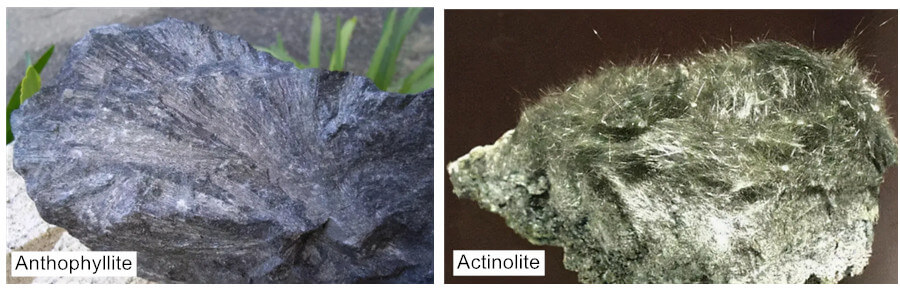
Actinolite generally exhibits green to dark green colors and may occur as elongated prismatic crystals, granular aggregates, or fibrous masses.
Its chemical composition varies depending on the magnesium-to-iron ratio.
Actinolite-bearing ores may be associated with tremolite, hornblende, chlorite, epidote, talc, and other metamorphic minerals.
From a beneficiation perspective, the main challenges include separating actinolite from associated amphibole and silicate minerals, controlling the particle size, and preserving the mineral’s natural crystal structure when required.
An important consideration is that some actinolite occurrences may have an asbestiform habit. Such material requires specialized identification and strict occupational health controls before any physical processing is considered.
Actinolite Beneficiation Methods
The appropriate beneficiation method depends on the mineralogical characteristics, crystal habit, liberation degree, and intended application.
For confirmed non-asbestiform actinolite material, potential separation methods may include:
1. Mineralogical Identification and Characterization
Mineralogical identification is the first step in evaluating actinolite-bearing material.
Techniques such as X-ray diffraction (XRD), optical microscopy, and appropriate electron microscopy methods can help identify actinolite and associated minerals.
Specialized analysis is necessary to distinguish non-asbestiform actinolite from potentially hazardous asbestiform material.
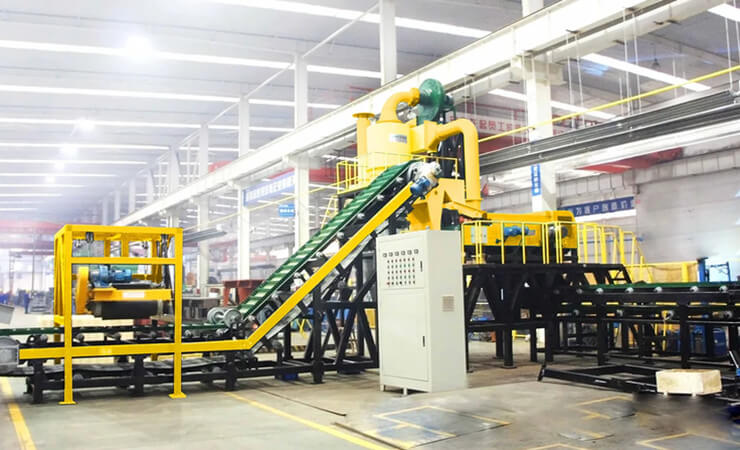
2. Hand Sorting and Selective Recovery
For coarse-grained, non-asbestiform deposits, selective recovery may be considered when actinolite crystals are visually distinguishable from associated minerals.
Hand sorting can help separate valuable mineral specimens from waste rock without requiring extensive mechanical processing.
3. Gravity Separation
Gravity separation may be evaluated when actinolite and associated gangue minerals exhibit sufficient differences in specific gravity.
Its effectiveness depends on mineral liberation, particle size, and the physical characteristics of the associated minerals.
4. Magnetic Separation
Actinolite contains varying amounts of iron, which can influence its magnetic response.
Magnetic separation may be investigated to distinguish actinolite from certain associated minerals or remove unwanted iron-bearing impurities.
However, the magnetic properties of actinolite and associated amphiboles may overlap. Laboratory magnetic susceptibility testing is therefore essential.
5. Flotation
Flotation may be investigated for suitable non-asbestiform ores requiring separation of actinolite from associated carbonate and silicate minerals.
The feasibility of selective flotation depends on mineral surface chemistry, reagent selectivity, and the mineralogical composition of the ore.
Processing Considerations
Actinolite should not be treated as an ordinary fibrous industrial mineral.
Where asbestiform material is suspected or identified, conventional crushing, grinding, dry screening, and gravity or magnetic separation circuits must not be recommended as routine processing operations.
A qualified assessment is required to determine whether the material can be handled and processed under applicable asbestos regulations.
Typical Processing Approach of Actinolite
For confirmed non-asbestiform actinolite ore, a conceptual beneficiation flowsheet may be expressed as:
Run-of-Mine Ore → Mineralogical Identification → Crushing → Screening → Grinding → Classification → Gravity Separation → Magnetic Separation / Flotation → Concentrate Dewatering → Actinolite Concentrate
The final process selection should prioritize mineral purity, recovery, and occupational safety.
Anthophyllite Beneficiation
Anthophyllite Introduction
Anthophyllite is a magnesium-iron amphibole mineral belonging to the orthorhombic amphibole group.
Its chemical composition is generally represented by (Mg,Fe)₇Si₈O₂₂(OH)₂.
Anthophyllite commonly occurs in magnesium-rich metamorphic rocks, particularly in metamorphosed ultramafic formations.
It generally exhibits brown, gray, greenish, or yellowish colors and may occur as columnar, prismatic, or fibrous crystals.
Anthophyllite-bearing deposits may be associated with talc, serpentine, chlorite, tremolite, and other magnesium-rich silicate minerals.
Its beneficiation can be challenging because of the close mineralogical and physical similarities between anthophyllite and other amphibole and magnesium silicate minerals. The iron content, crystal habit, particle size, and associated gangue minerals can significantly influence the selection of separation methods.
An important distinction must be made between ordinary non-asbestiform anthophyllite and anthophyllite asbestos. The latter is a recognized hazardous fibrous mineral and requires strict handling and regulatory controls.
Anthophyllite Beneficiation Methods
Potential beneficiation methods for confirmed non-asbestiform anthophyllite include:
- Hand sorting: May be suitable for coarse-grained material with clearly distinguishable crystals.
- Mineralogical identification: Used to distinguish anthophyllite from associated amphiboles and other magnesium-bearing silicates.
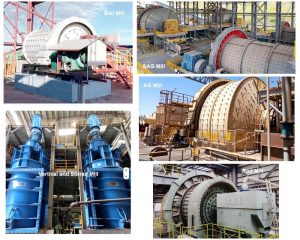
- Crushing and grinding: The raw ore is first crushed using a jaw crusher and a cone crusher, and then ground in a ball mill until the valuable minerals and gangue are liberated from one another.Applied only where appropriate to liberate non-asbestiform anthophyllite from its host rock.
- Screening and classification: Used to control particle-size distribution and separate coarse and fine fractions.
- Gravity separation:May be investigated when anthophyllite and associated gangue minerals exhibit sufficient density differences.
- Magnetic separation: May be considered for separating iron-bearing impurities, depending on their magnetic susceptibility.
- Flotation:May be evaluated for separating anthophyllite from associated talc, serpentine, quartz, and carbonate minerals, subject to laboratory testing.

The separation of anthophyllite from other amphibole minerals can be particularly difficult because their physical and surface properties may be very similar. Therefore, mineralogical characterization and selective separation tests are essential.
Safety considerations: Anthophyllite asbestos is a recognized asbestos variety. The presence of fibrous anthophyllite must be evaluated before any mechanical processing. Suspected asbestos-bearing material should not enter conventional crushing, grinding, or dry screening operations. Specialized asbestos identification, containment, and legally compliant management are necessary.
Typical Processing Approach of Anthophyllite
For confirmed non-asbestiform anthophyllite ore, a conceptual flowsheet may be expressed as:
Run-of-Mine Ore → Mineralogical Identification → Selective Crushing → Screening → Classification → Gravity Separation / Magnetic Separation → Flotation (If Required) → Concentrate Dewatering → Anthophyllite Concentrate
The actual processing route should be determined by the mineralogical characteristics and end-use specifications of the material.
Comparison of Actinolite and Anthophyllite Beneficiation
Actinolite and anthophyllite share several mineralogical and processing characteristics because both belong to the amphibole group.
However, their chemical compositions and crystal structures are different, which may influence their physical separation behavior.
|
Mineral |
Mineral Group |
Main Associated Minerals |
Potential Separation Methods |
|
Actinolite |
Amphibole |
Tremolite, chlorite, epidote, talc |
Gravity, magnetic separation, flotation |
|
Anthophyllite |
Amphibole |
Talc, serpentine, chlorite, tremolite |
Gravity, magnetic separation, flotation |
The above methods apply only to appropriately characterized non-asbestiform materials and are not universal processing recommendations.
Important Safety Considerations for Amphibole Minerals
The beneficiation of actinolite and anthophyllite requires particular attention to mineral morphology and occupational safety.
Some amphibole minerals can occur in asbestiform habits, producing thin fibers that may become airborne and pose serious health risks when inhaled.
Before evaluating any beneficiation process, the following considerations are essential:
1. Mineralogical Identification
Determine the mineral species and distinguish between asbestiform and non-asbestiform occurrences using qualified analytical methods.
2. Occupational Health Assessment
Evaluate potential exposure risks and applicable occupational health regulations before any material handling or processing activities.
3. Dust and Fiber Control
Suspected asbestos-bearing material requires specialized containment and handling. Ordinary dust suppression alone should not be considered sufficient protection.
4. Regulatory Compliance
Any sampling, transportation, storage, processing, or disposal of asbestos-containing material must comply with applicable local regulations and qualified professional guidance.
Conclusion
The beneficiation of actinolite and anthophyllite requires careful mineralogical analysis to distinguish non-asbestiform material. Separation methods (gravity, magnetic, flotation) must be tailored to ore characteristics, with strict safety protocols for handling fibrous forms. Ensure compliance with health regulations at all stages.