In the competitive mining industry, efficient mineral processing is crucial for profitability and sustainability. This guide provides plant operators and procurement managers with essential knowledge to make informed equipment decisions across all processing stages – from crushing to dewatering. We’ll first explore the core equipment requirements for a complete mineral processing plant, then uncover five critical purchasing pitfalls that can undermine your operation’s success. Finally, we’ll share targeted recommendations to optimize your most important equipment selections. Whether you’re establishing a new plant or upgrading existing infrastructure, these insights will help you maximize recovery rates while controlling operational costs.
Essential Equipment for Mineral Processing Plants
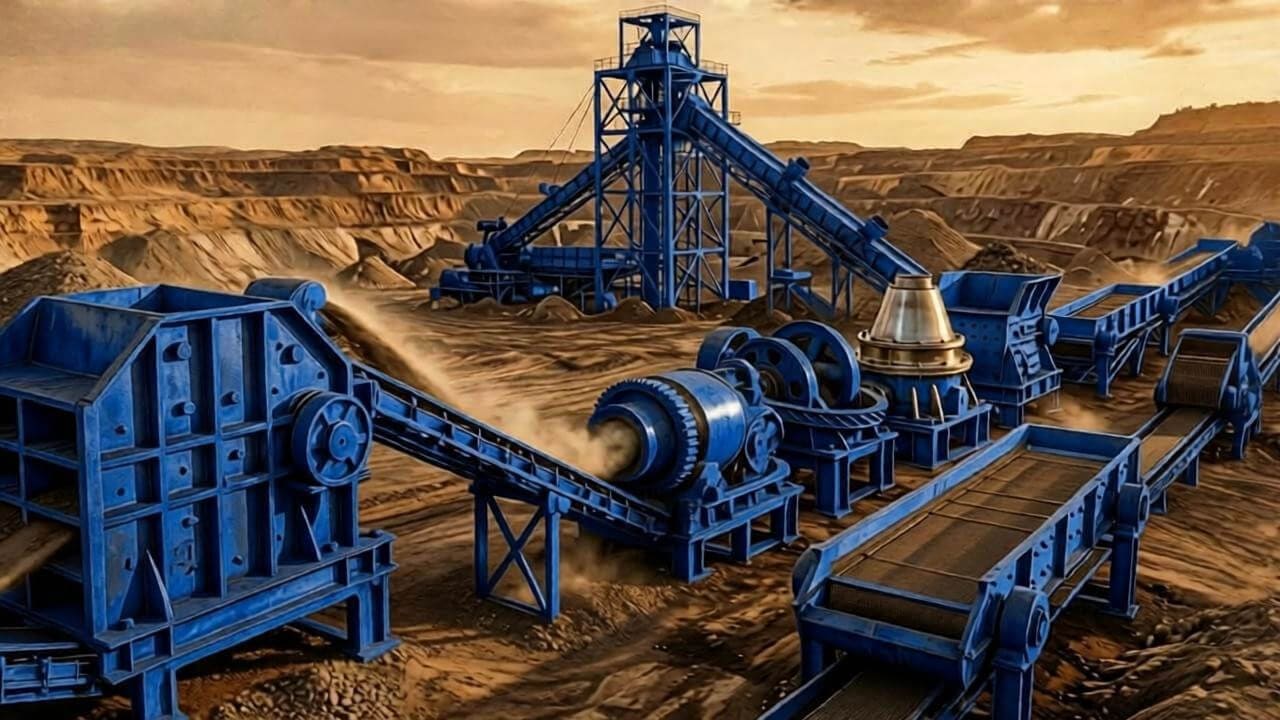
1. Crushing Section: Breaks large pieces of ore into smaller pieces
Primary and secondary crushers reduce ore size for further processing. Common types include:
- Jaw Crushers: For coarse crushing of hard materials.
- Gyratory Crushers: Used in high-capacity primary crushing.
- Cone Crushers: Ideal for secondary and tertiary crushing.
- Impact Crushers: Suitable for softer ores or recycling applications.
Vibrating Screen: Segregate crushed ore into different grades.
Feeder: 1 unit (uniform feeding)
Belt Conveyors: Several (connecting the various pieces of equipment)
2. Grinding Section: Grinding small pieces into powder
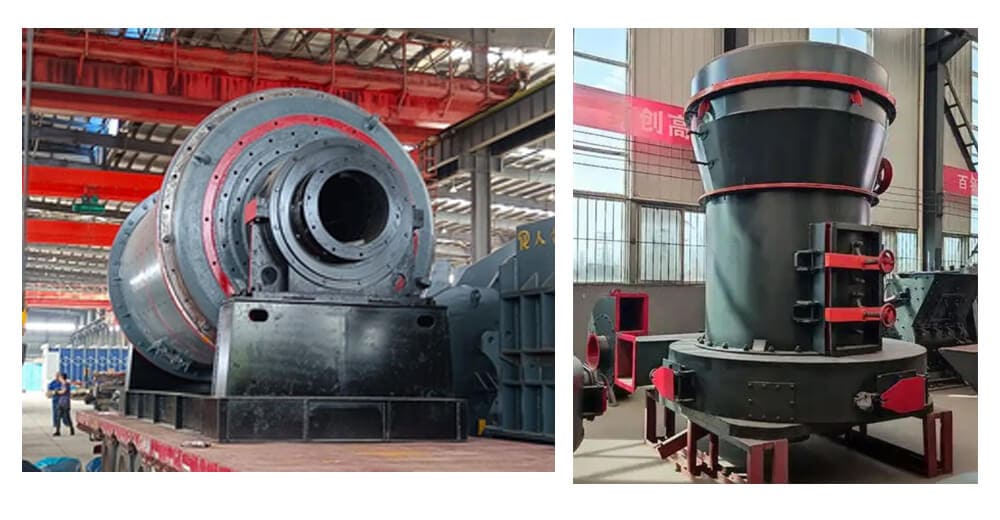
Finer particle size is achieved through grinding mills:
- Ball Mills: Use steel balls to grind ore into fine powder.
- Rod Mills: Employ steel rods for coarse grinding.
- SAG Mills (Semi-Autogenous Grinding): Combine crushing and grinding using ore and grinding media.
- Vertical Roller Mills: Energy-efficient solution for fine grinding.
Classifier: 1 unit (hydrocyclone or spiral classifier)
3. Beneficiation Section: Separating Useful Minerals
The equipment in this section varies the most, depending on your ore type and process:
- Magnetic Separation Line: 1–2 magnetic separators (dry + wet separation)
For processing magnetic or conductive materials:
- Magnetic Drum Separators: Remove ferrous metals from non-magnetic ore.
- High-Intensity Magnetic Separators (HIMS): Extract weakly magnetic minerals.
- Electrostatic Separators: Separate conductive materials via electric charge.
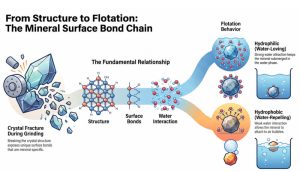
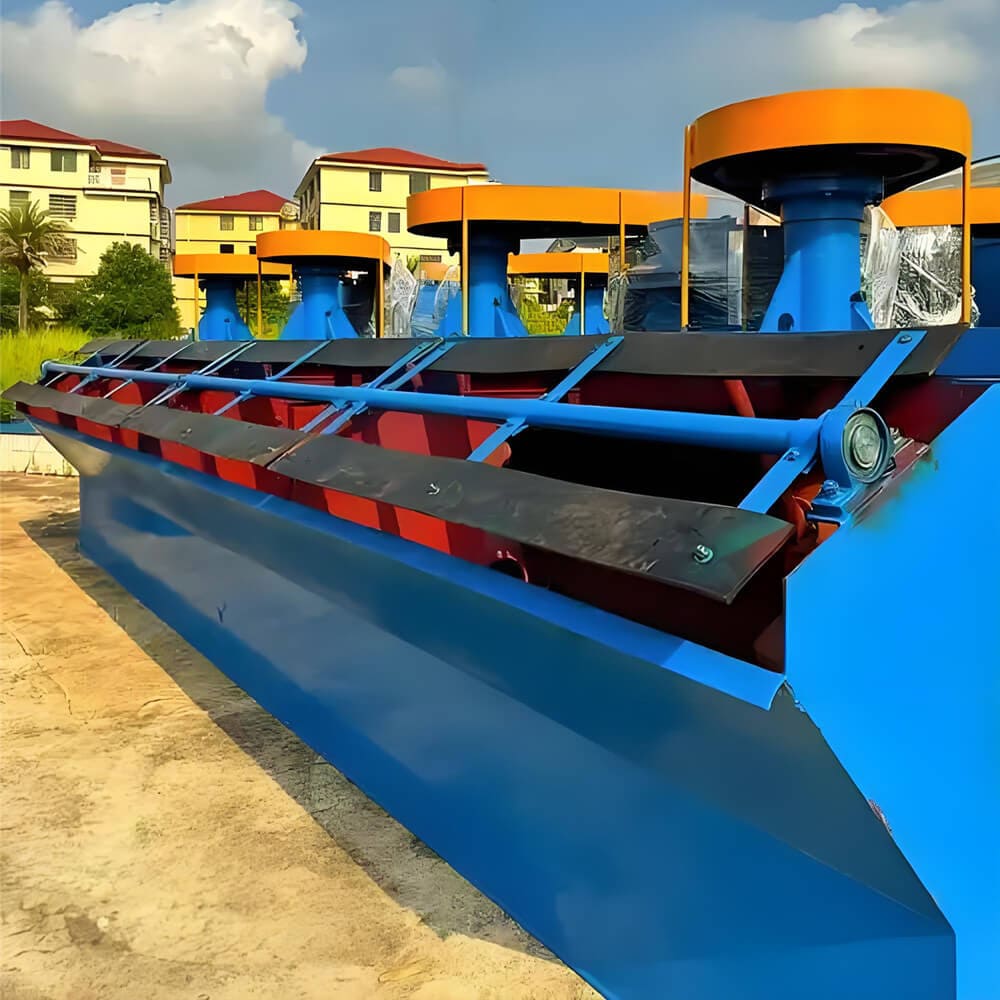
- Flotation Line: 8–16 flotation cells (roughing + concentrating + scavenging), 2–4 agitation tanks
Key for sulfide and oxide mineral recovery:
- Mechanical Flotation Cells: Use impellers to mix air and slurry.
- Column Flotation Cells: Provide better fine particle separation.
- Jameson Cells: High-efficiency froth flotation systems.
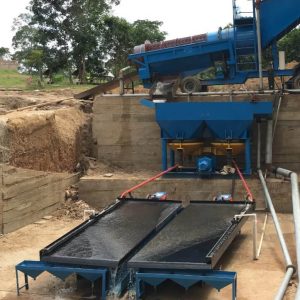
- Gravity Separation Line: 4–8 shaking tables or 4–8 spiral chutes
Makes use of mineral density differences:
- Jig Separators: Pulsating water separates denser particles.
- Shaking Tables: Gravity concentrators for fine ore processing.
- Spiral Concentrators: Separate minerals in slurry based on density.
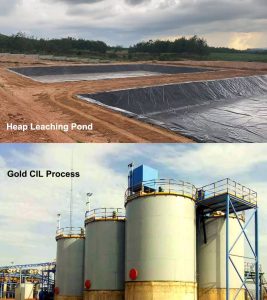
- Heap Leaching Line: Spray system, adsorption tower, desorption and electrolysis equipment
4. Dewatering Section: Removing water from the concentrate
Thickening & Filtration Equipment
Solid-liquid separation:
- Thickeners: Sedimentation tanks for slurry dewatering.
- Filter Presses: Use pressure to extract water from concentrates.
- Vacuum Disc Filters: Continuous filtration for fine particles.
Drying & Agglomeration Equipment
Prepares final products for transport or sale:
- Rotary Dryers: Reduce moisture in mineral concentrates.
- Fluid Bed Dryers: Efficient drying for fine powders.
- Pelletizing Drums: Form mineral powder into pellets.
1 set of tailings treatment equipment
Investing in high-quality mineral processing equipment enhances efficiency, reduces downtime, and maximizes recovery rates. Plant operators should select equipment based on ore characteristics, processing goals, and economic feasibility.
5 Pitfalls to Avoid When Buying Mineral Processing Equipment
Purchasing the wrong mineral processing equipment can lead to costly downtime, inefficient operations, and subpar recovery rates. To make a smart investment, avoid these common mistakes:
1. Ignoring Ore Characteristics
Pitfall: Choosing generic equipment without analyzing your ore’s hardness, moisture content, abrasiveness, and mineralogy.
Solution: Conduct thorough ore testing (e.g., grindability, liberation analysis) to select the right crushers, mills, and separators.
2. Prioritizing Price Over Long-Term Value
Pitfall: Opting for the cheapest equipment, leading to frequent breakdowns, high maintenance costs, and poor performance.
Solution: Compare lifecycle costs (energy efficiency, spare parts availability, maintenance needs) rather than just upfront price.
3. Overlooking Plant Compatibility & Scalability
Pitfall: Buying mismatched equipment that doesn’t integrate with existing systems or lacks capacity for future expansion.
Solution: Ensure new machinery aligns with current flowsheets and can be upgraded for increased throughput.
4. Neglecting Supplier Expertise & After-Sales Support
Pitfall: Buying from inexperienced vendors who don’t offer proper installation, training, or spare parts.
Solution:
- Check the supplier’s track record with similar projects.
- Confirm warranty terms and availability of technical support.
- Ask for case studies or client references.
5. Underestimating Operational & Energy Costs
Pitfall: Failing to account for power consumption, water usage, and labor requirements, leading to budget overruns.
Solution:
- Choose energy-efficient models (e.g., high-pressure grinding rolls over ball mills for certain ores).
- Calculate operating costs (water, reagents, power) before purchase.
Bonus Tip: Consider Modular & Used Equipment
- Modular plants can reduce capital costs and installation time.
- Quality used equipment(from reputable sellers) may offer cost savings if properly inspected.
Final Advice
Conduct pilot testing, consult metallurgical experts, and demand transparent cost breakdowns before finalizing any purchase. A well-planned investment ensures higher efficiency, lower downtime, and better ROI.
Key Recommendations for Selecting Mineral Processing Equipment
Optimizing mineral processing equipment selection is crucial for maximizing recovery rates and minimizing operational costs. The wrong choices can significantly impact your plant’s efficiency and profitability. Below are critical recommendations based on real-world operating experiences to help you avoid common but costly mistakes.
1. Avoid Oversizing Ball Mills
Problem: Ball mills consume 40-60% of total plant power. Choosing a model one size larger can waste 200-500 kWh/day, leading to $10,000+ in extra annual electricity costs.
Solution:
- Request mill sizing calculationsfrom suppliers based on ore hardness and processing capacity.
- Ensure precise matching—bigger is NOT better; it’s just more expensive to run.
2. Never Reduce Flotation Cell Count to Cut Costs
Problem:
- Reducing from 8 cells to 6 may save upfront costs but drops 3-5% recovery rates.
- For a 500 t/day copper plant, this can mean dozens of tons of lost concentrate annually.
Solution:
- Follow lab test recommendations for required retention time.
- Fewer cells = throwing away valuable product for small savings.
3. Don’t Choose Magnetic Separators Based on Price Alone
Problem:
- Two “identical” magnetic separators with 1,500 vs. 4,000 gauss can have a 30-50% price difference—and twice the performance gap.
- Weak fields mean good ore gets discarded as waste.
Solution:
- Conduct magnetic susceptibility tests first, then specify field strength requirements.
- A cheap but weak magnet is just a piece of scrap metal.
4. Never Undersize Thickeners
Problem:
- A smaller thickener fails to reach target density, cutting filter press throughput by 50%(e.g., an 8-hour job becomes 16+ hours).
- Saving $20K on the thickener may cost $100K in lost filtration efficiency.
Solution:
- Always round up in thickener sizing—under-sizing is far more costly than over-sizing.
Final Summary & Action Plan
Selecting mineral processing equipment requires careful consideration of both technical parameters and cost implications. Key takeaways:
- Right-size ball mills– Oversizing wastes energy without benefits
- Maintain proper flotation cell count– Short-term savings lead to long-term losses
- Specify correct magnetic strength– Don’t sacrifice performance for price
- Optimize thickener capacity– Undersizing creates downstream bottlenecks
Conclusion
Selecting the right mineral processing equipment requires balancing technical specifications, operational requirements, and economic factors. As we’ve examined, each processing stage – crushing, grinding, beneficiation, and dewatering – demands specialized equipment carefully matched to your ore characteristics and production goals. By avoiding common purchasing mistakes and following our targeted recommendations for critical equipment like ball mills, flotation cells, magnetic separators, and thickeners, you can significantly improve your plant’s efficiency and profitability.
Remember that the cheapest upfront option often becomes the most expensive long-term choice when considering energy consumption, maintenance costs, and recovery losses. Always conduct comprehensive ore testing, demand detailed technical specifications from suppliers, and analyze total lifecycle costs before making purchasing decisions. With this strategic approach to equipment selection, your mineral processing operation will be well-positioned to achieve optimal performance and maximum return on investment in today’s competitive mining environment.