Non-metallic ores surround us in everyday life yet remain mysterious. These minerals form essential components in industries from construction to cosmetics.
Non-metallic ores are minerals lacking metallic properties like conductivity or luster, used for their physical/chemical properties rather than metal content. Common examples include limestone, gypsum, and quartz. Processing typically involves crushing, grading, purification, and sometimes chemical treatment – methods varying significantly based on the mineral’s end use.
What Are Non-Metallic Minerals?
That ceramic mug in your hand? The glass in your window? Both come from non-metallic minerals hiding in plain sight.
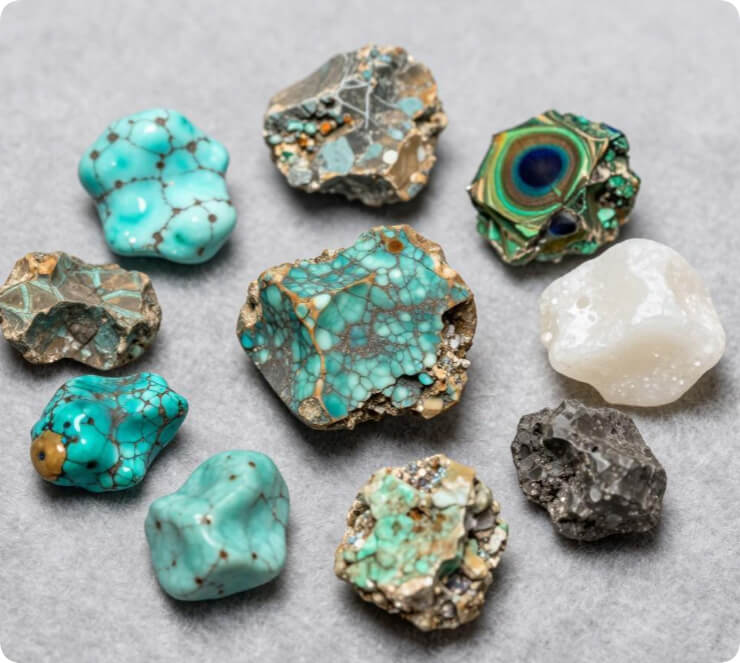
Non-metallic minerals are naturally occurring inorganic substances without metallic characteristics. They’re classified into industrial minerals (talc, kaolin), construction materials (sand, gravel), and gemstones. Unlike metallic ores, they’re valued for properties like hardness (diamonds), whiteness (kaolin), or chemical reactivity (phosphates).
Categories and Applications
1. Industrial Minerals
| Mineral | Key Property | Primary Uses |
| Kaolin | Whiteness, plasticity | Paper coating, ceramics |
| Talc | Softness, lubricity | Cosmetics, plastics |
| Quartz | Hardness, piezoelectricity | Electronics, glass |
2. Construction Materials
- Limestone: Cement production (crushed)
- Gypsum: Drywall manufacturing (calcined)
- Sand: Concrete aggregate (graded)
3. Specialty Minerals
- Fluorspar: Steelmaking flux
- Barite: Drilling mud weighting agent
- Diamond: Cutting/grinding tools
What Are the Primary Characteristics of Non-Metallic Minerals?
A diamond cuts glass, talc powders your face – what makes non-metallic minerals so diverse yet useful?
Key distinguishing features include absence of metallic luster/conductivity, varied hardness (1 Mohs for talc vs. 10 for diamond), and chemical stability. Most exhibit ionic/covalent bonding, resulting in properties like thermal resistance (mica), refractoriness (fire clay), or adsorption capacity (bentonite).
Critical Property Matrix
Physical Properties Driving Value
| Property | Example Minerals | Industrial Importance |
| Hardness | Diamond, quartz | Abrasives, cutting tools |
| Cleavage | Mica, gypsum | Electrical insulation, drywall |
| Porosity | Pumice, diatomite | Filtration, absorbents |
Chemical Properties Utilization
- Acid Resistance(Graphite): Lining for chemical tanks
- Alkalinity(Limestone): Flue gas desulfurization
- Ion Exchange(Zeolites): Water softening
Non-metallic ores are most notably characterized by their wide variety. Globally, over 200 types (including gemstones) are commercially exploited, while China has identified more than 100 economically valuable non-metallic minerals. Another defining feature of non-metallic ores is their enormous diversity in physical and chemical properties, with few common traits. For instance, within this broad category, we find the hardest natural substance—diamond—alongside one of the softest, talc. Some are rare and priceless gemstones, while others are abundant and inexpensive, such as clay, sand, and gravel.
These extreme differences in properties and value lead to vastly distinct mining, beneficiation (ore processing), and processing methods. Unlike metallic ores, most non-metallic ores are utilized as aggregates of useful minerals or entire rocks. Thus, during beneficiation, preserving the crystal structure and functional integrity of the minerals becomes a primary consideration in selecting processing techniques and equipment. As a result, non-metallic ore beneficiation is notably more complex than that of other solid minerals.
How Are Non-Metallic Ores Processed?
Transforming rocks into paper filler or smartphone glass requires precise processing steps tailored to each mineral.
Basic processing flows include: crushing→sizing→beneficiation (washing, flotation, magnetic separation)→drying. Advanced purification may involve acid leaching (kaolin bleaching), calcination (gypsum to plaster), or micronization (talc powder production). Equipment selection depends on mineral brittleness, purity requirements, and particle size needs.
Non-Metallic Ore Processing
The beneficiation process of non-metallic ore generally consists of three continuous stages:
- Ore Preparation– Crushing, grinding, and classification
- Separation– Main beneficiation methods
- Dewatering– Removing water from the concentrated product
1. Ore Preparation
To extract valuable minerals, the ore must first be crushed and ground to achieve mineral liberation—separating useful minerals from waste rock (gangue). Intermediate crushing or grinding may also be required to meet specific particle size requirements for subsequent steps.
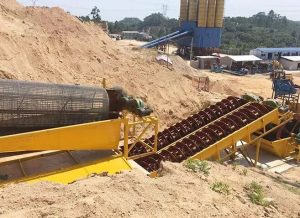
Crushing & Screening: Crushers and screens work in combination to break down ore into smaller fragments.
Grinding & Classification: Mills and classifiers often operate in a closed-circuit loop to achieve the desired fineness.
These processes form the core of the crushing plant and grinding & separation plant.
2. Separation Methods
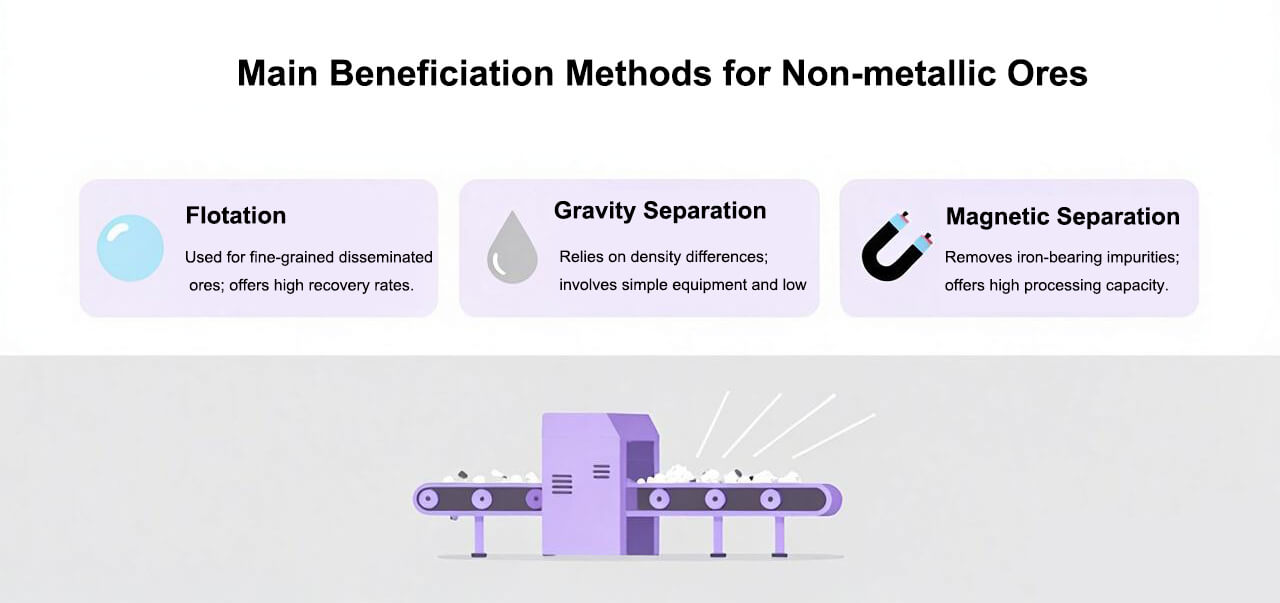
Once the ore is properly liberated, different separation techniques are employed based on mineral properties:
(1) Flotation (Froth Flotation)
- Separates minerals based on surface wettability differences by using specialized chemicals in a flotation machine.
- The most widely applied method, suitable for most ore types.
(2) Magnetic Separation (MagSep)
- Uses magnetic properties to differentiate minerals in a magnetic separator.
- Primarily used for iron ores and rare-earth minerals.
(3) Gravity Separation (Gravity Concentration)
- Relies on density differences, causing minerals to settle at varying rates in water, air, or dense media.
- Commonly used for tungsten, tin, gold, iron, and manganese ores, as well as certain non-metallic minerals.
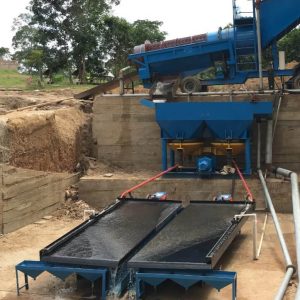
- Performed using jigs, spirals, shaking tables, or centrifugal concentrators.
Other less common methods include:
- Electrostatic Separation(based on electrical conductivity)
- Friction Separation(using differing friction coefficients)
- Optical Sorting(automated color or reflectivity-based sorting)
- Hand Sorting(manual selection of high-grade material)
Chemical Processing
| Mineral | Treatment | Purpose |
| Kaolin | Oxalic acid leaching | Iron removal |
| Phosphate | Sulfuric acid digestion | Fertilizer production |
| Perlite | Thermal expansion | Lightweight aggregate |
Each technique must be carefully chosen to maximize mineral recovery while maintaining product quality—a key challenge in non-metallic ore beneficiation.
Conclusion
Non-metallic minerals form the hidden backbone of modern industry, with processing methods as varied as their applications. Understanding their unique properties allows optimal extraction and utilization – whether creating gleaming ceramics or pollution-controlling absorbents. Proper processing transforms raw minerals into high-value products supporting countless sectors.
Key Takeaways:
- Value derives from physical/chemical properties, not metal content
- Processing complexity depends on purity requirements
- Beneficiation methods must preserve critical mineral characteristics
- Emerging technologies enable novel applications