Mining equipment forms the backbone of every mining operation. Selecting the right equipment not only determines production efficiency but also has a direct impact on operating costs, workplace safety, equipment reliability, and the long-term profitability of a mining project. As the mining industry continues to evolve toward larger-scale, intelligent, and environmentally sustainable operations, equipment selection has become a comprehensive engineering decision rather than simply choosing machinery with the required capacity.
An effective equipment selection strategy should consider geological conditions, equipment reliability, economic performance, automation capabilities, environmental compliance, and future operational flexibility. The following six principles provide a systematic framework for selecting mining equipment that maximizes productivity while minimizing lifecycle costs.
Mining Equipment Selection Principle 1: Matching Mining Conditions
The first and most fundamental principle of mining equipment selection is ensuring that the equipment matches the actual mining conditions. Equipment performance varies significantly under different geological environments; therefore, understanding ore characteristics, mining methods, and site conditions is essential before making any investment decisions.
Compatible with ore properties
Ore properties—including hardness, density, abrasiveness, moisture content, and clay content—directly influence equipment selection. For example, soft rock with a hardness coefficient below 6 can be excavated efficiently using a roadheader. Medium-hard rock (hardness coefficient 6–10) generally requires drilling and blasting before loading and hauling. Hard rock with a hardness coefficient above 10 demands the drill-and-blast method supported by high-performance hydraulic drilling jumbos.
Ore containing high moisture or clay content may cause blockages during material handling. In such cases, feeders and conveying equipment should incorporate anti-blocking or screening functions to maintain continuous operation.
Compatible with mining methods and processes
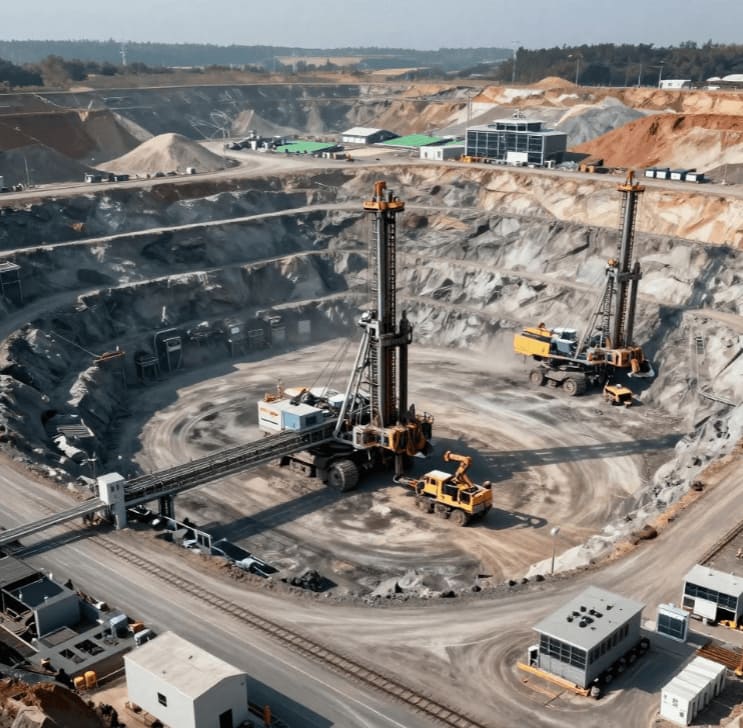
Mining methods also dictate equipment configuration. Surface mines generally require large-capacity equipment such as electric rope shovels, hydraulic excavators, and mining haul trucks to maximize production efficiency. Underground mines, however, are constrained by tunnel dimensions and maneuverability requirements, making compact equipment such as low-profile Load-Haul-Dump (LHD) loaders and underground drilling jumbos more suitable.
Special Environments in Mines
In addition, special environmental conditions must be considered. Mines with high groundwater inflow require pumping systems with sufficient capacity and safety margins, while gassy underground mines demand explosion-proof electrical equipment that complies with the applicable safety classifications.
Mining Equipment Selection Principle 2: Equipment Reliability
Mining equipment typically operates continuously under heavy-duty conditions. Equipment failures can result in significant production losses and expensive downtime. Therefore, reliability should be one of the primary considerations during equipment selection.
Equipment reliability and durability
Critical equipment—including crushers, mine hoists, main ventilation fans, and dewatering pumps—should be selected from proven manufacturers with strong operational records and high Mean Time Between Failures (MTBF). Mature and widely used equipment generally offers greater operational stability and lower maintenance risks.
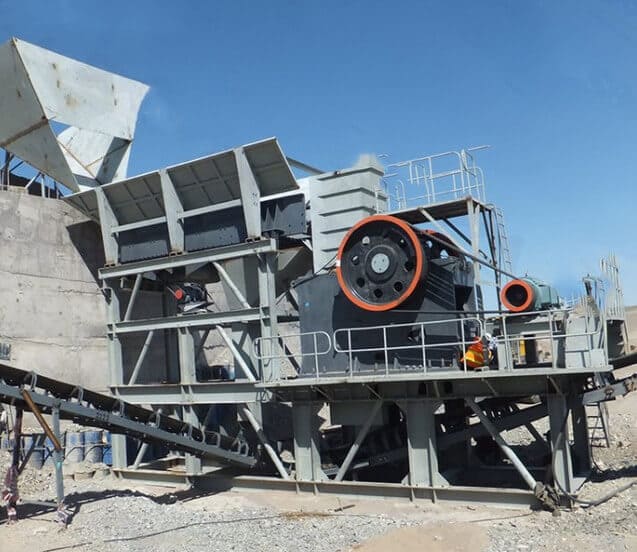
Equipment should also be capable of operating reliably under harsh environmental conditions. Low-temperature hydraulic systems are essential for cold climates, while humid, corrosive, or dusty environments require enhanced sealing, corrosion resistance, and dust protection.
Ease of maintenance
Ease of maintenance is another important aspect of reliability. Equipment with modular designs and standardized components allows faster replacement of damaged parts, reducing maintenance time and improving equipment availability.
After-sales service and spare parts support
Furthermore, supplier after-sales support and spare parts availability should never be overlooked. Since many mines are located in remote regions, rapid technical support and local spare parts inventories are critical to minimizing downtime. Equipment with widely available spare parts and strong local service networks generally results in lower maintenance costs throughout its service life.
Mining Equipment Selection Principle 3: Equipment Cost-Effectiveness
Equipment selection should not be based solely on the purchase price. Instead, mining companies should evaluate the Life Cycle Cost (LCC) of each equipment option to determine its true economic value.
Life Cycle Cost (LCC)
The lifecycle cost includes equipment purchase, installation, energy consumption, routine maintenance, spare parts replacement, downtime losses, and residual value at the end of service life. Equipment with a lower initial purchase price may ultimately become more expensive due to higher fuel consumption, frequent failures, and increased maintenance costs.
Conversely, premium equipment with higher energy efficiency and greater reliability often delivers lower total ownership costs over its operational life. For example, although battery-electric or electric mining trucks typically require a higher initial investment than diesel-powered trucks, their lower energy and maintenance costs often make them more economical over long-term operation.
Equipment capacity aligned with production scale
Production capacity should also be carefully matched to the mine’s production plan. Oversized equipment results in unnecessary capital investment and low utilization rates, whereas undersized equipment creates production bottlenecks and limits mine output.
Equipment selection should therefore follow a reverse engineering approach: determine the annual production target, calculate daily and hourly production requirements, and then select equipment with appropriate capacity to achieve those objectives efficiently.
Mining Equipment Selection Principle 4: Equipment Automation and Intelligence
Automation and digitalization have become defining trends in modern mining. Equipment selection should prioritize intelligent technologies that improve productivity, reduce labor requirements, and enhance operational safety.
Automated drilling rigs, intelligent drilling jumbos, autonomous haul trucks, and automated loading equipment significantly reduce manual intervention in hazardous working environments. By minimizing human exposure to underground operations and high-risk areas, these technologies improve workplace safety while increasing production efficiency.
Modern mining equipment is increasingly equipped with sensors that continuously monitor vibration, temperature, pressure, lubrication condition, and structural loads. Combined with Industrial Internet of Things (IIoT) platforms, big data analytics, and artificial intelligence, these monitoring systems enable predictive maintenance by identifying potential failures before they occur.
In addition, equipment should support integration with mine management systems, fleet management platforms, and centralized control centers. Real-time monitoring, remote diagnostics, and intelligent production scheduling provide valuable data for optimizing overall mine performance and advancing smart mining initiatives.
Mining Equipment Selection Principle 5: Environmental Protection and Safety Compliance
As environmental regulations become increasingly stringent, mining equipment must satisfy both environmental protection requirements and occupational safety standards.
Preference should be given to energy-efficient and low-emission equipment, including electric mining trucks, battery-powered loaders, and diesel engines that comply with the latest emission standards. High-efficiency motors, variable frequency drives (VFDs), and energy-saving technologies further reduce operating costs while minimizing environmental impact.
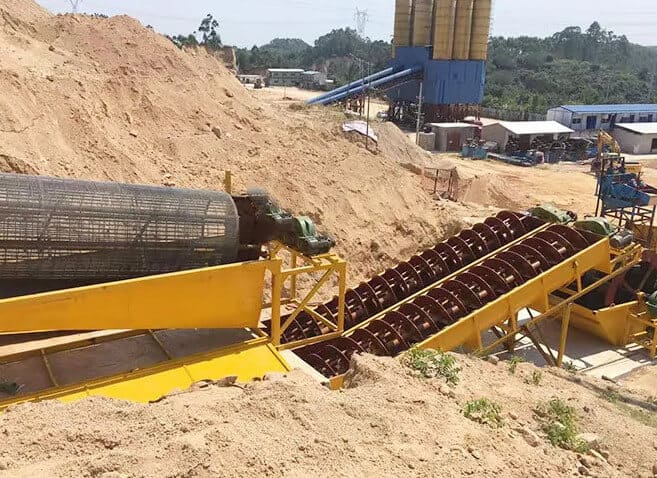
Dust and noise control should also be incorporated into equipment selection. Wet crushing systems, enclosed conveyor belts, water spray dust suppression systems, and high-efficiency dust collectors effectively reduce airborne dust, while low-noise designs improve workplace conditions and support green mining initiatives.
From a safety perspective, equipment must comply with relevant national and international standards and certifications. Underground mining equipment should feature explosion-proof electrical systems, overload protection, emergency shutdown functions, fire protection, and comprehensive alarm systems to ensure safe operation in hazardous environments.
Mining Equipment Selection Principle 6: Flexibility
Mining projects often operate for decades, during which production capacity, mining methods, and operational requirements may change. Therefore, mining equipment should be selected with sufficient flexibility to accommodate future expansion and technological upgrades.
Equipment should provide scalability through reserved capacity or modular upgrade options. For example, crushers may be designed with provisions for higher-power drive systems, allowing production capacity to increase without replacing the entire machine. Such flexibility reduces future capital expenditures while extending equipment service life.
Multi-functional equipment also offers significant operational advantages. Modern drilling jumbos, for example, can perform drilling, rock bolting, and grouting operations within a single machine, reducing equipment investment while improving operational efficiency.
Finally, equipment should demonstrate strong adaptability to different mining conditions and production requirements. Machines capable of operating under varying geological conditions and process changes provide greater long-term value and maximize equipment utilization.
Conclusion
Mining equipment selection is a comprehensive engineering process that balances technical performance, operational reliability, economic efficiency, workplace safety, environmental responsibility, and future development requirements.
A sound equipment selection strategy should be based on six fundamental principles: matching mining conditions, ensuring reliability, maximizing economic efficiency, embracing automation and intelligent technologies, complying with environmental and safety standards, and maintaining operational flexibility.
By adopting a lifecycle-oriented approach and integrating these principles into equipment planning, mining companies can improve production efficiency, reduce operating costs, enhance workplace safety, and build intelligent, sustainable mining operations that remain competitive for decades to come.