Lazulite, iron-lazulite, alunogen, and triclinic barytocalcite are relatively uncommon minerals with distinct chemical compositions, crystal structures, physical properties, and geological occurrences. Lazulite and iron-lazulite are phosphate minerals mainly associated with metamorphic and phosphate-rich geological environments, whereas alunogen is a highly hydrated aluminum sulfate commonly formed under acidic and oxidizing conditions. Triclinic barytocalcite is a barium-calcium carbonate mineral that typically occurs in hydrothermal environments.
The beneficiation of minerals is a complex process requiring tailored approaches based on mineralogical composition, physical properties, and economic considerations. This guide details the beneficiation methods for lazulite (a blue phosphate mineral), iron-lazulite (its iron-rich variant), alunogen (a highly hydrated aluminum sulfate), and triclinic barytocalcite (a barium-calcium carbonate). Each mineral presents unique challenges due to variations in density, magnetic properties, solubility, and association with gangue materials. By understanding the distinct processing techniques—such as gravity separation, flotation, magnetic separation, and leaching—mineral processors can optimize recovery while minimizing costs and environmental impact.
Lazulite
Introduction
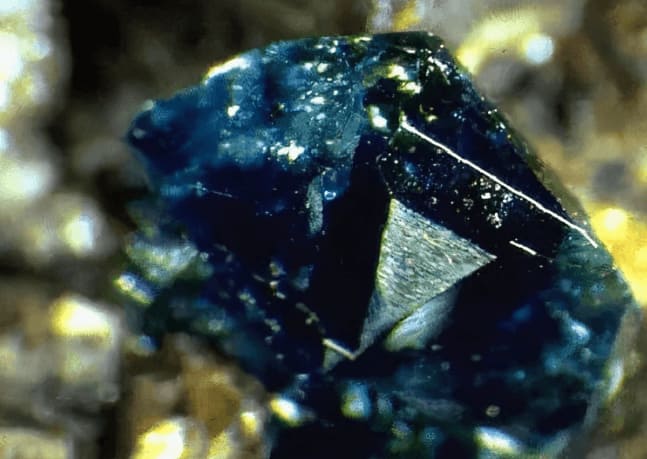
Lazulite is a phosphate mineral with the ideal chemical formula MgAl₂(PO₄)₂(OH)₂. It belongs to the lazulite group and crystallizes in the monoclinic crystal system. Lazulite commonly exhibits blue, deep blue, blue-green, or greenish-blue colors.
It generally occurs in metamorphic, phosphate-rich rocks, particularly in association with quartz, mica, kyanite, and other phosphate minerals. The mineral may occur as disseminated grains, aggregates, or relatively coarse crystals. The mineralogical associations and grain size have a major influence on its potential beneficiation.
From a processing perspective, the principal challenge is to achieve sufficient liberation of lazulite from associated silicate and phosphate gangue while minimizing excessive fines generation.
Beneficiation Methods
Potential beneficiation methods for lazulite include:
- Hand sorting: Suitable for coarse-grained, visually distinctive, high-grade material.
- Crushing and grinding: Used to liberate lazulite from the surrounding gangue minerals.
- Screening and classification: Used to control particle size and remove undesirable coarse or fine fractions.
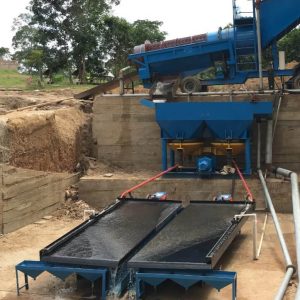
- Gravity separation: May be effective when lazulite has a sufficiently different density from associated gangue.
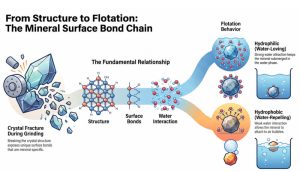
- Flotation: Potentially useful for fine-grained material when selective separation from quartz, mica, calcite, or other phosphate minerals is required.
The selection of flotation reagents would need to be determined experimentally because the surface chemistry of phosphate minerals varies considerably with pH, reagent type, and mineral association.
Typical Processing Flowchart
A conceptual beneficiation flowsheet for lazulite can be expressed as:
Run-of-Mine Ore → Crushing → Screening → Grinding → Classification → Gravity Separation and/or Flotation → Concentrate Thickening → Filtration and Drying → Lazulite Concentrate
For coarse, high-grade material, a simplified circuit may be sufficient:
Ore → Crushing → Screening → Hand Sorting/Gravity Separation → Concentrate
Iron-Lazulite
Introduction
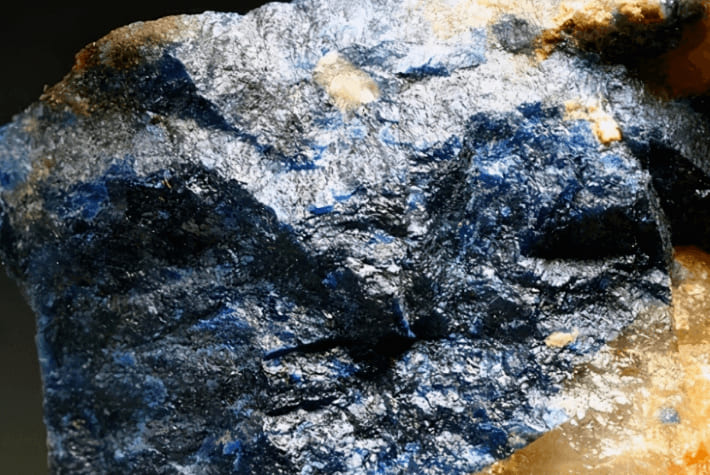
Iron-lazulite is an iron-rich member of the lazulite mineral group. Its composition can be described by the substitution of Fe²⁺ for Mg²⁺ in the lazulite structure, with an idealized iron-rich composition approaching FeAl₂(PO₄)₂(OH)₂.
Iron-lazulite generally occurs in metamorphic and phosphate-rich geological environments and may coexist with lazulite, quartz, mica, and other phosphate minerals. The degree of Mg–Fe substitution can result in variations in color, density, and other physical properties.
Compared with ordinary lazulite, the presence of iron may provide additional opportunities for physical separation, particularly where iron-bearing phases exhibit enhanced magnetic susceptibility.
Beneficiation Methods
Potential processing methods include:
- Crushing and grinding: Required to liberate iron-lazulite from the host rock.
- Screening and classification: Used to establish appropriate size fractions.
- Gravity separation: Can be considered because of differences in density between iron-lazulite and lighter gangue.
- Magnetic separation: May be investigated when iron-rich iron-lazulite or associated iron-bearing minerals exhibit sufficient magnetic susceptibility.
- Flotation: May be required for fine-grained ore and for selective separation from silicate or carbonate gangue.
Magnetic separation should not be assumed to be effective solely because the mineral contains iron. The actual magnetic susceptibility of the iron-lazulite and the mineralogical form of the iron need to be determined experimentally.

Typical Processing Flowchart
A conceptual flowsheet is:
Run-of-Mine Ore → Crushing → Screening → Grinding → Classification → Magnetic Separation → Gravity Separation / Flotation → Concentrate Thickening → Filtration and Drying → Iron-Lazulite Concentrate
An alternative circuit may be:
Ore → Crushing → Grinding → Magnetic Separation → Flotation → Concentrate
The actual sequence should be determined by mineralogical characterization and laboratory beneficiation tests.
Alunogen
Introduction
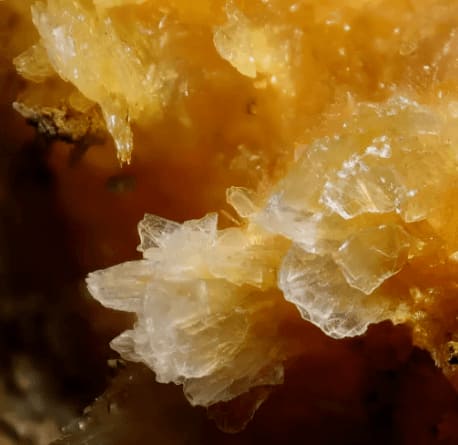
Alunogen is a highly hydrated aluminum sulfate mineral with an approximate chemical formula of Al₂(SO₄)₃·17H₂O. It commonly occurs as colorless, white, pale yellow, or pale gray material and may have a fibrous, powdery, or efflorescent appearance.
Unlike lazulite and barytocalcite, alunogen is commonly a secondary mineral formed through the oxidation and weathering of sulfide-bearing rocks under acidic, sulfate-rich conditions. It can occur in mine environments and is particularly associated with processes related to acid mine drainage.
The high water content and relatively high solubility of alunogen are critical characteristics from a processing perspective. Conventional crushing, grinding, and flotation circuits may therefore be less appropriate than solution-based recovery methods.
Beneficiation Methods
1. Selective Dissolution & Recrystallization (Preferred for High-Grade Alunogen)
Process steps:
- Crushing & Screening: Dry crushing to -5 mm to minimize solubility losses.
- Controlled Leaching:Solvent: Cold water (<25°C) to limit impurity dissolution; Solid/liquid ratio: 1:3 (prevents Alunogen saturation).
- Filtration: Vacuum filtration to separate insoluble residues (clays, Fe-oxides).
- Evaporation Crystallization:Temperature: 30–40°C (avoids decomposition); Yield: ~85% pure Al₂(SO₄)₃·17H₂O crystals.
2. Froth Flotation (For Impure or Mixed Ores)
Reagent Scheme:
- Collector: Dodecylamine (100–200 g/t) at pH 3–4 (H₂SO₄ adjustment).
- Frother: MIBC (20–40 g/t).
- Depressant: Sodium silicate (200–300 g/t) for silicate suppression.
Target: Concentrate Alunogen while rejecting gypsum/iron sulfates.
Limitation: Low recovery due to solubility losses in slurry.
3. Magnetic Separation (For Fe-rich Varieties)
Equipment: High-gradient magnetic separator (HGMS, 1.0–1.5 T).
Efficiency: Removes up to 70% of Fe-bearing minerals (halotrichite, jarosite).
4. Size & Density Separation
Shaking table/spiral concentrator: Effective for coarse alunogen (+0.1 mm) with dense gypsum impurities.
Hydraulic classification: Uses differences in settling rates (alunogen dissolves, gangue settles).
Purification & Byproduct Recovery
Iron Removal: Precipitation: Adjust leachate pH to 2.5–3.0 with NaOH to drop Fe³⁺ as Fe(OH)₃.
Calcium Removal: Add Na₂CO₃ to convert CaSO₄ to insoluble CaCO₃.
Hydrated Alum Crystallization: Cool saturated solution to 10°C for high-purity Al₂(SO₄)₃·18H₂O.
Economic & Environmental Considerations
| Parameter | Value |
| Water consumption | 4–6 m³ per ton ore |
| Energy cost (thermal) | $15–20/ton (for evaporation) |
| Tailings management | Neutralization of acidic wastewater (pH 6–8) |
Key Notes:
- Dry processing is ideal to avoid solubility issues (e.g., pneumatic sorting).
- Lab-scale leaching tests are mandatory due to ore variability.
Recommended Flowchart
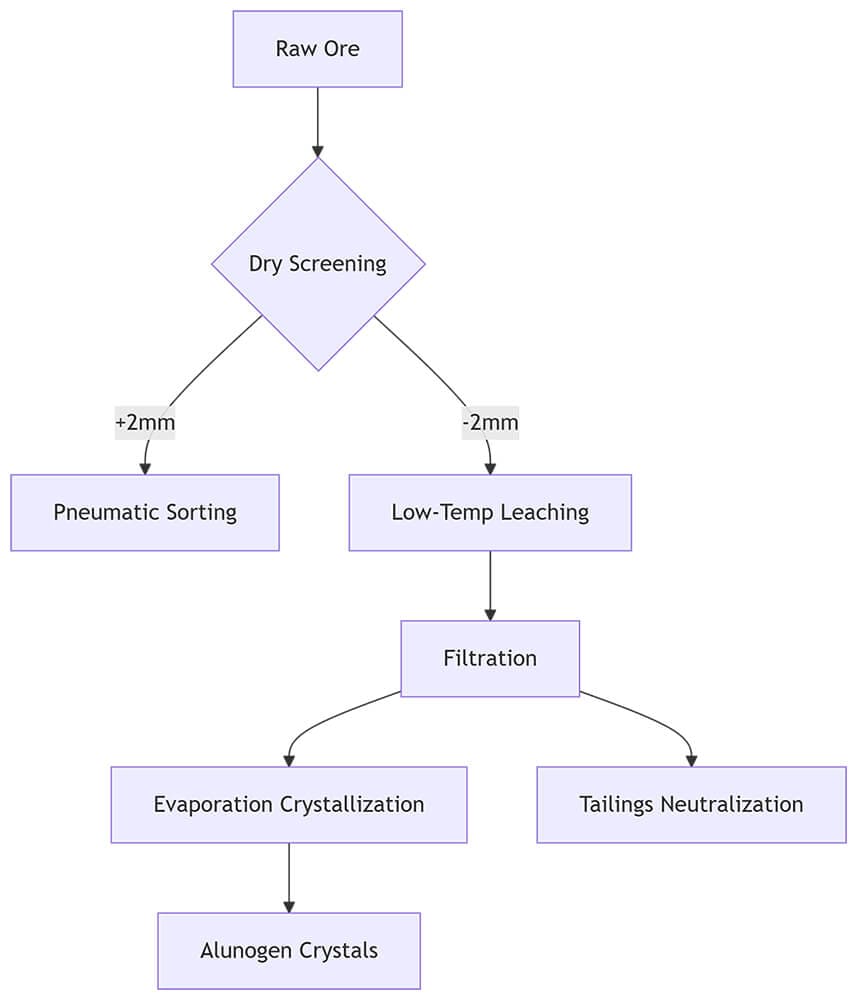
This approach maximizes recovery while minimizing Al₂(SO₄)₃ losses. For Fe-rich ores, integrate magnetic separation before leaching.
Triclinic Barytocalcite
Introduction
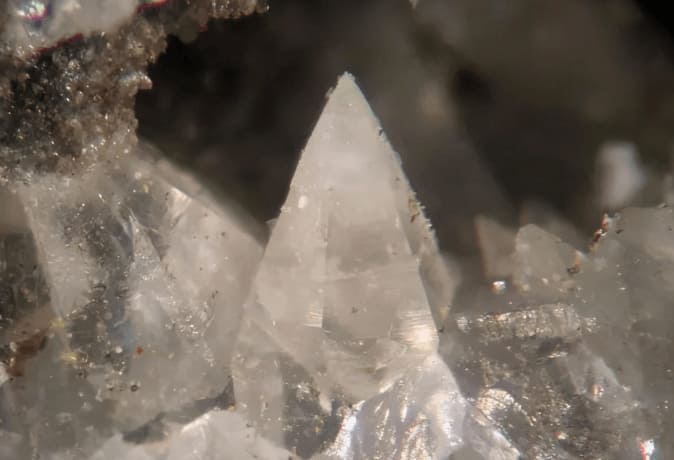
Barytocalcite is a barium-calcium carbonate mineral with an approximate chemical formula of BaCa(CO₃)₂. It crystallizes in the triclinic crystal system. It is generally colorless, white, gray, or pale-colored and has a relatively high specific gravity due to its high barium content.
Barytocalcite commonly occurs in hydrothermal mineral deposits, where it may be associated with baryte, calcite, fluorite, quartz, galena, and other hydrothermal minerals. Its beneficiation therefore depends strongly on the mineralogical relationships between barytocalcite and these associated minerals.
The principal processing objective is generally to exploit differences in density and surface properties between barytocalcite and the associated gangue minerals.
Beneficiation Methods
Potential beneficiation methods include:
- Crushing and grinding: Used to liberate barytocalcite from associated minerals.
- Screening and classification: Used to control particle size.
- Gravity separation: Particularly attractive because barytocalcite has a relatively high density.
- Flotation: Can be used for selective separation from calcite, quartz, fluorite, or sulfide minerals when adequate differences in surface properties exist.
- Magnetic separation: May be used as a supplementary method for removing iron-bearing magnetic gangue rather than directly recovering barytocalcite.
The presence of calcite is potentially challenging because both barytocalcite and calcite are carbonate minerals and may have similar surface properties. Reagent selection and pH control may therefore be important in a flotation circuit.
Typical Processing Flowchart
A conceptual physical beneficiation circuit is:
Run-of-Mine Ore → Crushing → Screening → Grinding → Classification → Gravity Separation → Flotation → Concentrate Thickening → Filtration and Drying → Barytocalcite Concentrate
Where the ore contains substantial magnetic gangue, the circuit may be modified to:
Ore → Crushing → Grinding → Magnetic Separation → Gravity Separation → Flotation → Concentrate
Conclusion
Effective beneficiation of these minerals hinges on a detailed understanding of their physical and chemical properties.
- For lazulite, conventional physical beneficiation methods such as crushing, grinding, screening, gravity separation, and flotation can be considered, with the final selection depending mainly on liberation and grain size.
- Iron-lazulite may provide an additional opportunity for magnetic separation where the iron-rich mineral exhibits sufficient magnetic susceptibility, although this assumption must be confirmed experimentally.
- Alunogen requires a substantially different approach because of its high degree of hydration and solubility. Minimizing dissolution losses during handling and processing is critical, and controlled dissolution, solid-liquid separation, impurity removal, and recrystallization may provide more suitable routes for high-grade material. Conventional flotation or magnetic separation may be considered as supplementary methods for specific ore types or impurity assemblages.
- For triclinic barytocalcite, its relatively high density makes gravity separation an important potential beneficiation method, while flotation can be incorporated when selective separation from calcite, quartz, fluorite, or other associated minerals is required. Magnetic separation may serve mainly as a means of removing iron-bearing gangue rather than as a direct recovery method for barytocalcite.
By integrating these strategies, processors can maximize yield, purity, and cost-efficiency across diverse mineralogical contexts. The most appropriate beneficiation strategy should be established through systematic mineralogical characterization, chemical analysis, liberation studies, and laboratory-scale separation tests.