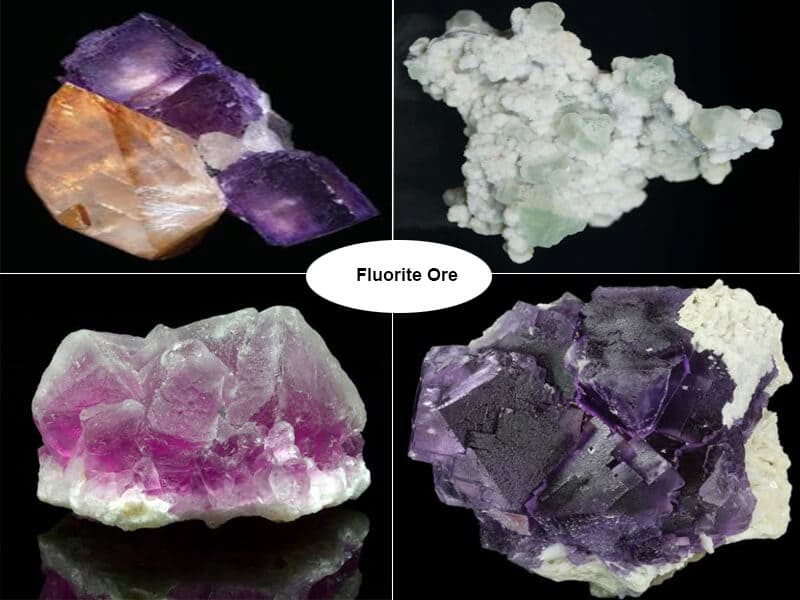
Fluorite, also known as fluorspar, is an important industrial mineral widely used in the chemical, metallurgical, and building materials industries. The quality of fluorite concentrates directly affects their suitability for different industrial applications, making effective mineral processing essential for commercial production.
Fluorite ore beneficiation primarily relies on flotation, but the optimal processing method depends on the ore’s mineral composition, associated gangue minerals, and liberation characteristics. Based on their dominant associated gangue minerals, fluorite ores can be classified into four main types: quartz-type, calcite-type, barite-type, and sulfide-type ores. Each type presents different separation challenges and requires a tailored beneficiation strategy.
This article explains the mineral characteristics, main separation difficulties, and typical beneficiation methods for the four fluorite ore types, along with the key factors to consider when selecting and optimizing a fluorite processing flowsheet.
1. Quartz-Type Fluorite Ore
Quartz-type fluorite ore consists mainly of fluorite and quartz, with the fluorite content sometimes reaching 80%–90%. Minor amounts of calcite, barite, and sulfide minerals may also be present.
The main objective of beneficiation is to reduce the silica content of the concentrate while maintaining a high fluorite recovery. For fine-grained, disseminated ores, staged grinding and flotation are commonly employed to improve mineral liberation and separation efficiency.
Oleic acid or oxidized paraffin soap can be used as a fluorite collector, sodium carbonate as a pH regulator, and sodium silicate (water glass) as a depressant for silicate gangue. Multiple cleaning stages may be required to obtain a high-quality fluorite concentrate.
2. Calcite-Type Fluorite Ore
Calcite-type fluorite ore consists mainly of fluorite and calcite. Calcite may account for more than 30% of the ore, and quartz may also be present. Some deposits contain a more complex quartz–calcite–fluorite assemblage.
The separation of fluorite from calcite is difficult because both minerals contain calcium and exhibit similar flotation behavior under certain conditions. Their interactions in aqueous solutions can further complicate selective separation.
Flotation is commonly used, with oleic acid or other fatty acids serving as fluorite collectors. Sodium silicate and modified forms, such as acidified or salt-modified sodium silicate, may be used to depress carbonate minerals and improve selectivity.
Because both fluorite and calcite can float readily with fatty acid collectors at pH 8–9.5, effective separation depends on the selective depression of calcite and careful control of pulp chemistry. Reagent combinations and operating conditions should be optimized through flotation tests.
3. Barite-Type Fluorite Ore
Barite-type fluorite ore consists mainly of barite and fluorite, with barite typically accounting for 10%–40% of the ore. Pyrite, galena, and sphalerite may also occur. In some deposits, higher quartz content results in a quartz–barite–fluorite assemblage.
The main beneficiation challenge is separating fluorite from barite because their flotation responses can be similar. A common approach is to float both minerals together to produce a bulk fluorite–barite concentrate, followed by selective separation.
In the bulk flotation stage, sodium carbonate may be used as a modifier, sodium silicate as a gangue depressant, and oleic acid as a collector. The mixed concentrate can then be separated using one of two approaches: depressing barite to float fluorite, or depressing fluorite to float barite.
Reagent selection is critical to this process. Certain trivalent metal ions, including Al³⁺ and Fe³⁺, may depress barite while activating fluorite under suitable conditions. Conversely, some barium and lead salts can activate barite and depress fluorite. Their effects depend on reagent concentration, pulp chemistry, and mineral surface conditions and should therefore be verified experimentally.
4. Sulfide-Type Fluorite Ore
Sulfide-type fluorite ore has a mineral composition similar to that of quartz-type fluorite ore but contains significant amounts of metal sulfides. These may include galena, sphalerite, and pyrite. In some deposits, lead and zinc concentrations may be high enough to justify the recovery of separate metal concentrates.
The typical beneficiation process involves preferentially floating sulfide minerals before recovering fluorite. Xanthates or dithiophosphates (Aerofloat-type collectors) are commonly used to collect sulfides. After sulfide removal, fatty acid collectors can be used to float fluorite.
This sequential flotation approach helps reduce sulfide contamination in the fluorite concentrate and may allow the recovery of valuable lead- and zinc-bearing products. The final flowsheet depends on the sulfide mineral assemblage, liberation characteristics, and economic value of the associated metals.
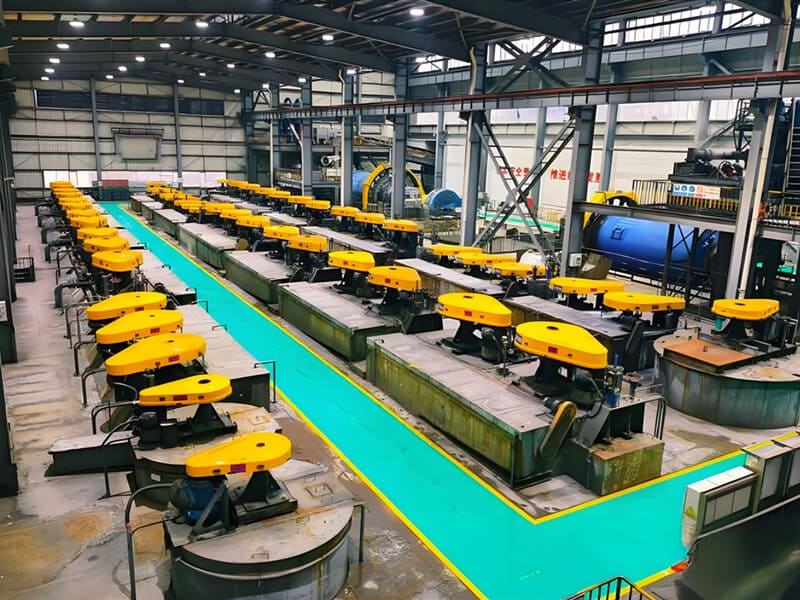
Comparison of Fluorite Ore Types and Beneficiation Methods
The four types of fluorite ores differ primary in their associated gangue minerals and the difficulty of separating them from fluorite. Quartz-type ores mainly require silica removal, calcite-type ores require selective separation of calcite, barite-type ores require careful control of fluorite–barite flotation, and sulfide-type ores generally benefit from prior sulfide removal.
Table 1. Main Characteristics and Beneficiation Methods of Fluorite Ores
OreType | Main Separation Challenge | Typical Beneficiation Strategy |
Quartz-type | Removal of quartz and reduction of silica | Staged grinding and flotation, followed by concentrate cleaning |
Calcite-type | Separation of fluorite from calcite | Selective flotation using fatty acid collectors and carbonate depressants |
Barite-type | Separation of fluorite from barite | Bulk flotation followed by selective separation |
Sulfide-type | Removal of sulfides and recovery of associated metals | Preferential sulfide flotation followed by fluorite flotation |
Key Factors in Fluorite Beneficiation Process Selection
The selection of a suitable beneficiation process should be based on mineral composition, grain size, liberation characteristics, and concentrate specifications. Laboratory flotation tests are essential for optimizing reagent combinations, pH conditions, grinding fineness, and cleaning stages.
Several factors should be considered when designing a fluorite beneficiation flowsheet:
- Mineral composition: Identify the dominant gangue minerals and any potentially valuable associated minerals.
- Grinding fineness and mineral liberation: Determine the grinding requirements needed to liberate fluorite without unnecessary overgrinding.
- Flotation reagent scheme: Select appropriate collectors, depressants, and pH regulators based on the specific separation requirements.
- Concentrate grade and recovery: Balance product quality with fluorite recovery to achieve the desired processing performance.
- Operating costs and environmental management: Evaluate reagent consumption, energy requirements, process water recycling, and tailings management.
In addition to concentrate grade and fluorite recovery, process design should consider the potential recovery of associated valuable minerals. For example, sulfide-bearing fluorite ores may offer opportunities to produce separate lead or zinc concentrates, improving the overall economic value of the deposit.
Conclusion
The four main fluorite ore types—quartz-type, calcite-type, barite-type, and sulfide-type—require different beneficiation strategies because their associated gangue minerals exhibit distinct separation characteristics. Quartz-type ores generally focus on silica removal, calcite-type ores require selective fluorite–calcite separation, barite-type ores need carefully controlled fluorite–barite separation, and sulfide-type ores typically benefit from preferential sulfide flotation before fluorite recovery.
Flotation is the principal method for fluorite beneficiation, but successful process design depends on matching the grinding conditions, reagent scheme, and separation flowsheet to the specific ore characteristics. Laboratory mineralogical analysis and flotation testing are therefore essential steps in selecting an effective process.
By optimizing mineral liberation, improving separation selectivity, recovering valuable associated minerals, and managing energy, water, and tailings responsibly, mineral processing plants can improve fluorite concentrate quality, increase resource utilization, and reduce operating costs. A well-designed beneficiation process provides a practical foundation for the efficient and sustainable development of fluorite resources.