Gold miners often struggle with choosing between heap leaching and carbon-in-leach (CIL). The wrong choice can cost millions in lost gold. I’ve seen operations bleed profits simply because they didn’t match the process to their ore type.
Heap leaching suits low-grade, oxidized ores with simple mineralogy, offering lower upfront costs. Carbon-in-leach works better for high-grade (>3g/t) or refractory ores, delivering 20% higher recovery but requiring more investment. The breakeven point comes when extra recovered gold justifies CIL’s higher costs.
Let’s break down the key factors that determine which method puts more gold in your pocket. These aren’t just technical details – they’re the difference between profit and struggle.
What is The Difference in Cost Between Heap Leaching and CIL?
When weighing heap leaching against carbon-in-leach (CIL), the cost gap often determines project viability. I’ve watched mines choose wrong and bleed profits for years. Let’s dissect where the dollars diverge.
Heap leaching plants cost ¥3-5M to build, while CIL plants require ¥7-10M. But operating costs reverse this: heap leaching spends ¥8-12/ton on chemicals and stacking, whereas CIL runs ¥15-25/ton with reagents and carbon. The cost difference stems from grinding needs – heap leach uses simple crushing while CIL requires 200-mesh grinding and carbon systems. And over 5 years of processing 500,000tpa, CIL’s extra recovery often covers its premium.
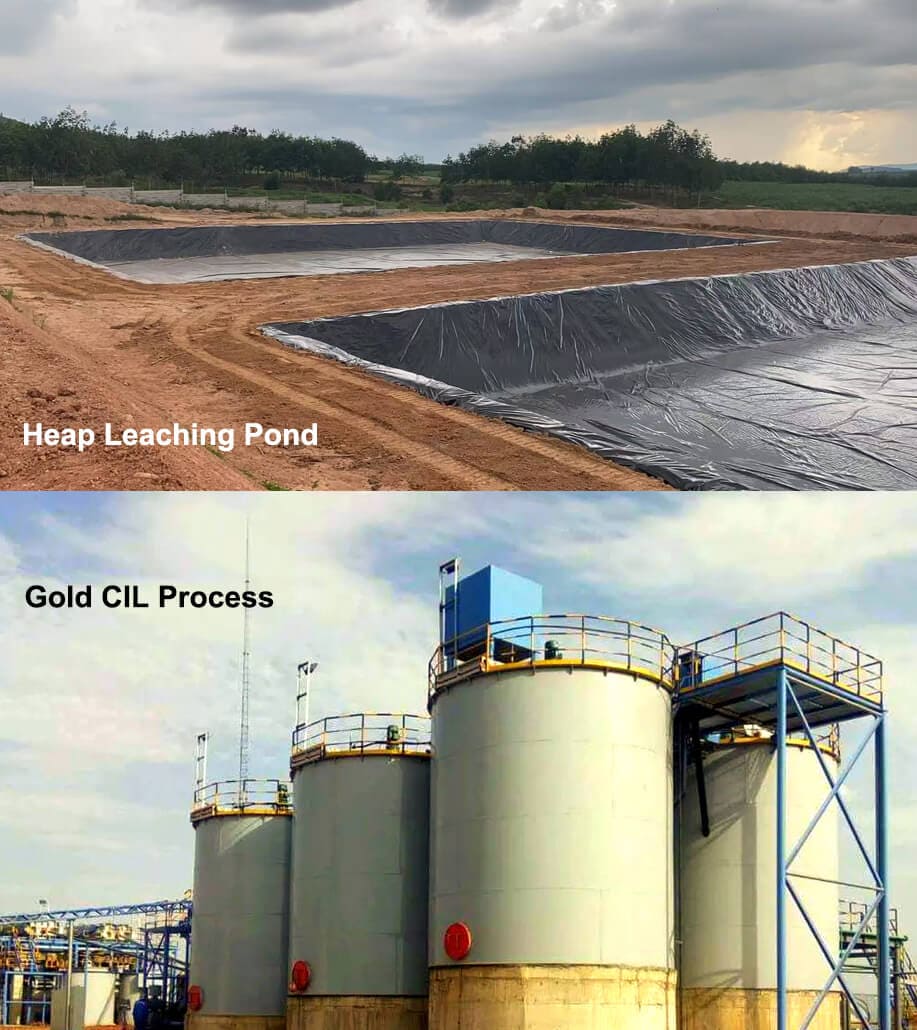
The cost difference between heap leaching and carbon-in-leach (CIL) in gold mining is primarily reflected in two key areas: operating costs per metric ton of ore and initial capital investment. The overall cost of heap leaching is significantly lower than that of CIL, with the difference in unit processing costs between the two methods exceeding a factor of two.
Differences in Operating Costs per Ton of Ore
Heap Leaching: Conventional processing costs are 12–20 RMB per ton; optimized processes can reduce this to around 12 RMB. It requires only simple crushing and spray leaching—eliminating the need for fine grinding—resulting in extremely low energy and reagent consumption.
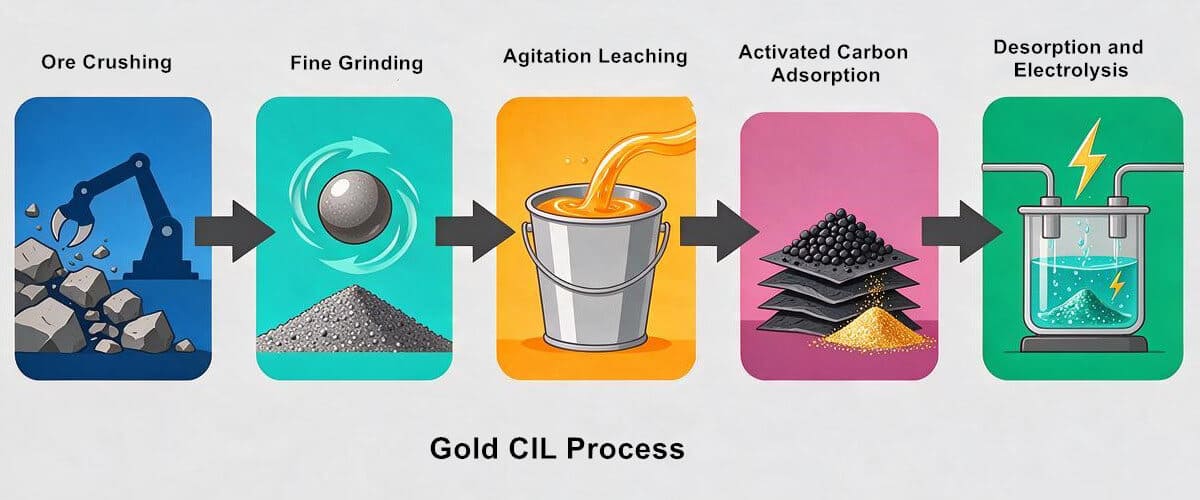
Carbon-in-Leach (CIL): Conventional processing costs are 25–40 RMB per ton. It requires fine grinding (to below 200 mesh) and a full suite of equipment for agitated leaching, activated carbon adsorption, and high-temperature desorption/electrolysis, leading to significantly higher costs for grinding energy, reagents, and activated carbon consumables.
Differences in Initial Infrastructure Investment
Heap Leaching: No need for large-scale grinding workshops or leaching plants; requires only the installation of impermeable liners and spray/collection systems. For the same processing capacity, total investment is only 30%–40% of that for CIL. A project with a thousand-ton daily capacity requires an investment of only around 2 million RMB and can be commissioned within 4–6 months.
CIL: Requires a complete set of facilities for crushing/grinding, leaching tanks, desorption/electrolysis, and environmental water treatment. For the same processing capacity, total investment is 2–3 times that of heap leaching, with a construction period of 12–18 months.
Differences in Other Associated Costs
Labor and O&M Costs: Heap leaching features a high degree of automation, with labor and O&M costs of only 2–3 RMB per ton. CIL involves complex equipment and operational steps, resulting in labor and O&M costs of 8–12 RMB per ton.
Environmental Disposal Costs: Heap leaching generates large volumes of tailings, requiring extensive impermeable storage areas; long-term environmental O&M costs account for approximately 15% of the total. CIL produces fine-grained tailings with higher cyanide degradation costs, but the tailings can be directly repurposed, making long-term environmental compliance costs more controllable.
Investment Payback Period: The payback period for heap leaching is only 1.5–2 years (with some low-grade tailings projects recovering costs in just 8 months). The payback period for CIL is generally 2.5–3.5 years, meaning capital recovery is significantly slower.
What Are The Characteristics of Heap Leaching and CIL Process?
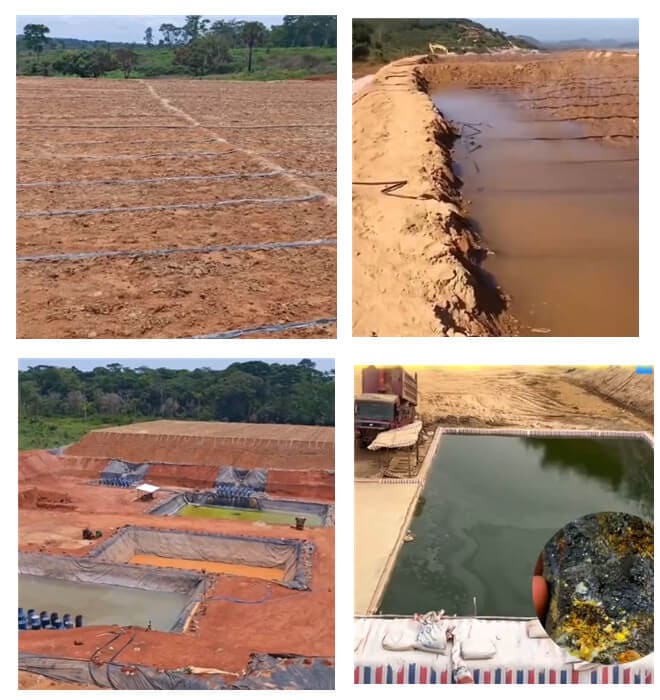
Pouring cyanide over crushed ore isn’t “heap leaching” – it’s gold down the drain. These processes work fundamentally differently.
Heap leaching percolates cyanide through stacked ore for 60-90 days, extracting 50-75% gold. CIL mixes powdered ore with cyanide and carbon in tanks for 24-48 hours, capturing 85-95% gold. Heap leaching handles <3 mm crushed ore; CIL needs <75 μm grinding. Carbon adsorption makes CIL 3x faster than heap leaching.
Technical Comparison Matrix
| Parameter | Heap Leaching | CIL |
| Particle Size | <3 mm crushed | <75μm ground |
| Retention Time | 60-90 days | 24-48 hours |
| Recovery Range | 50-75% | 85-95% |
| Reagent Efficiency | Lower (more cyanide consumption) | Higher (carbon recirculation) |
| Weather Impact | High (rains disrupt irrigation) | Low (controlled tank environment) |
Key considerations
- Heap leaching fails with clayey ores (percolation issues)
- CIL struggles with carbonaceous ores (gold preg-robbing)
- Heap leach pads require 2x more land than CIL plants
- CIL needs consistent power for grinding mills
In Which Situations Are Heap Leaching and CIL Most Suitable?
That “perfect ore” your geologist described? It probably doesn’t exist. Real-world ores demand compromise.
Choose heap leaching when: ore is oxidized (<10% sulfides), grade is 0.3-1.5g/t, mineralogy is simple (no carbon/clay), and space is available. Prefer CIL for: sulfide ores, grades >2g/t, complex mineralization, or limited land. Always run bottle roll tests first – theoretical recoveries often differ by 15%.
Decision Framework
1. Ore Type
- Oxidized: Heap leaching
- Transitional: Hybrid (heap + CIL)
- Primary: CIL
2. Grade Thresholds
| Ore Type | Heap Leach Cutoff | CIL Preferred |
| Oxide | 0.3g/t | >1.8g/t |
| Sulfide | Not recommended | >2.5g/t |
3. Practical Constraints
- Capital availability: Heap if <$5M budget
- Timeframe: CIL reaches full production faster
- Environmental: Heap needs more water management
Case Example: A Mongolian operation achieved 82% recovery from 1.2g/t oxide ore via heap leaching. Their neighbor with 3g/t sulfides got only 38% until switching to CIL.
How Should One Choose Between Heap Leaching and CIL to Ensure Profitability?
Profit isn’t about choosing the “best” technology – it’s about matching your exact situation.
Run an NPV comparison: calculate extra gold recovery from CIL versus its higher costs over your mine life. For deposits <200,000oz, heap leaching usually wins. Above 500,000oz, CIL’s recovery advantage dominates. Always factor in ore variability – test multiple samples, not just the sweet spot.
Step-by-Step Selection Process
1. Ore Testing
- Bottle roll tests (standard and extended)
- Column leach tests (minimum 3m height)
- Preg-robbing assessment
2. Financial Modeling
Parameters to compare:
- Upfront capital difference
- Operating cost delta
- Recovery rate impact
- Metal price sensitivity
3. Risk Assessment
| Risk Factor | Heap Leach | CIL |
| Price Crash | More vulnerable | Better buffer |
| Grade Drop | Handles low grades | Becomes uneconomic |
| Permitting | Easier | More complex |
Practical Tip: We helped a Ghanaian miner use heap leaching for 0.7g/t surface oxides while reserving CIL for deeper 3.2g/t sulfides – optimal use of both methods.
Conclusion
Heap leaching offers lower costs for simple, low-grade ores but leaves substantial gold unrecovered. CIL delivers superior recovery for complex, higher-grade ores at greater expense. The smart choice depends on your specific ore characteristics, financial capacity, and operational constraints. Always base decisions on comprehensive test work and detailed financial modeling – not just upfront cost savings. Ultimately, the right technology maximizes lifetime gold output, not just initial capital preservation.